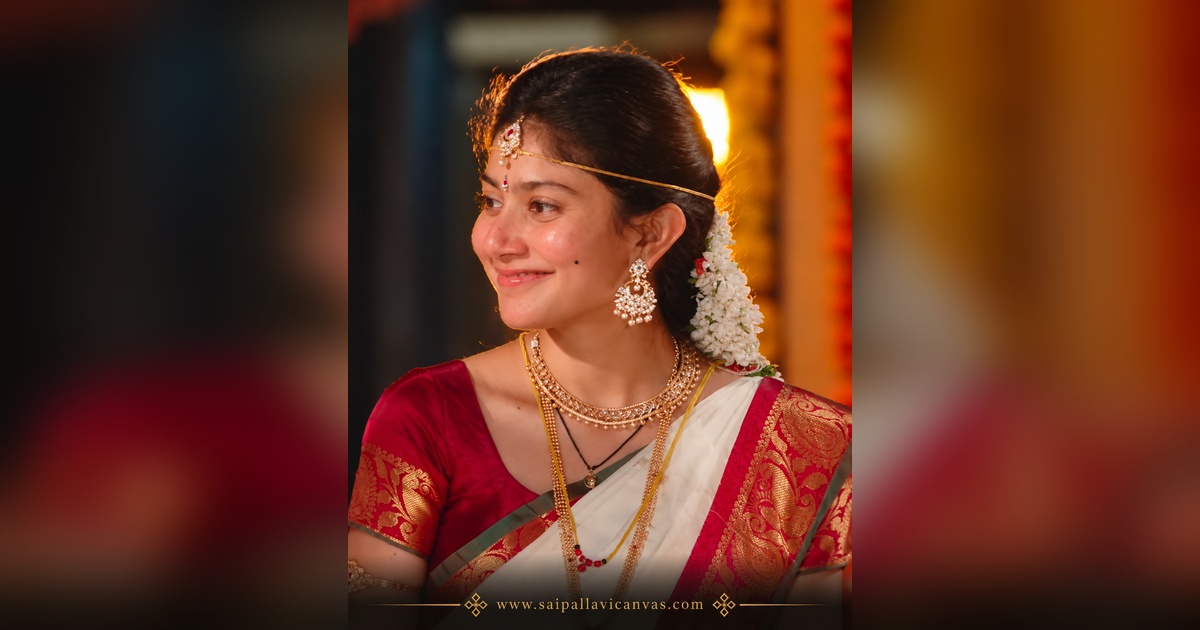
5 Years of Love Story
How Sai Pallavi's Mounika Waited Out a Pandemic and Left Bhanumathi Behind
The First Theatre After the Silence of the Pandemic
Five years of Love Story: the film that waited, then arrived with its spine intact.
On 24 September 2021, after more than a year of stopped calendars, Sekhar Kammula's Love Story opened in theatres. It was a Telugu musical romance on paper. In the hall it was something rarer: a mainstream film that asked what honour actually means when caste and gender are the real plot.
Five years later, the anniversary is not nostalgia for a hit song. It is a reminder of how the film was made, delayed, and still landed with the performances that justified the wait.
01The FilmmakerSekhar Kammula
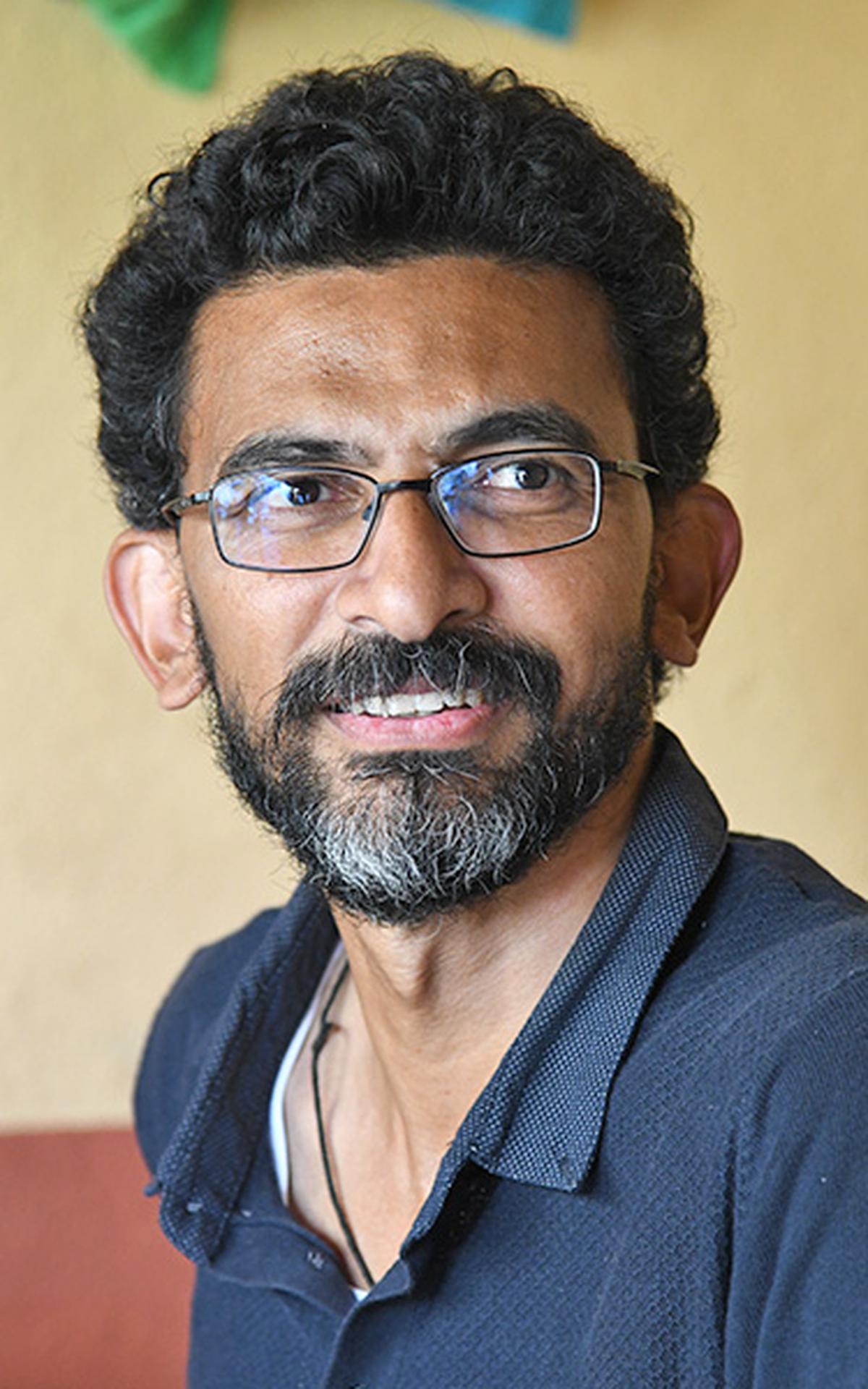
Sekhar Kammula directed Love Story (2021). After Fidaa, he wanted a bigger social canvas, caste and gender, not just a family-level romance. He has said he feared becoming "stale," and that caste was harder to write than corruption in Leader because "it hits you." His years at Howard University, where he was exposed to racism and feminism, and a college campaign he ran after the Nirbhaya case ("I care, I react"), fed into the film. He is known for organic songs, strong women, and a "gentleman" hero; here the conflict is more external, that is society, not just the couple.
Kammula wrote the story, screenplay, and dialogues himself. He has said the first draft is his; the team, including the women on it, then debates lines that feel politically off. His guiding question through the process: "Why am I making this film?"
The project began in September 2018 as a musical romance with debutants, with Dimple Hayathi originally attached, before it was recast with Naga Chaitanya and Sai Pallavi. The pooja was held on 27 June 2019 in Tirupati. Principal photography began on 9 September 2019 around Hyderabad, Telangana villages, Dubai, and Bodakonda Falls; the pandemic paused the shoot, which finished in November 2020, ahead of the theatrical release on 24 September 2021.
Why am I making this film?
Sekhar Kammula, the question he returned to through the making of Love Story
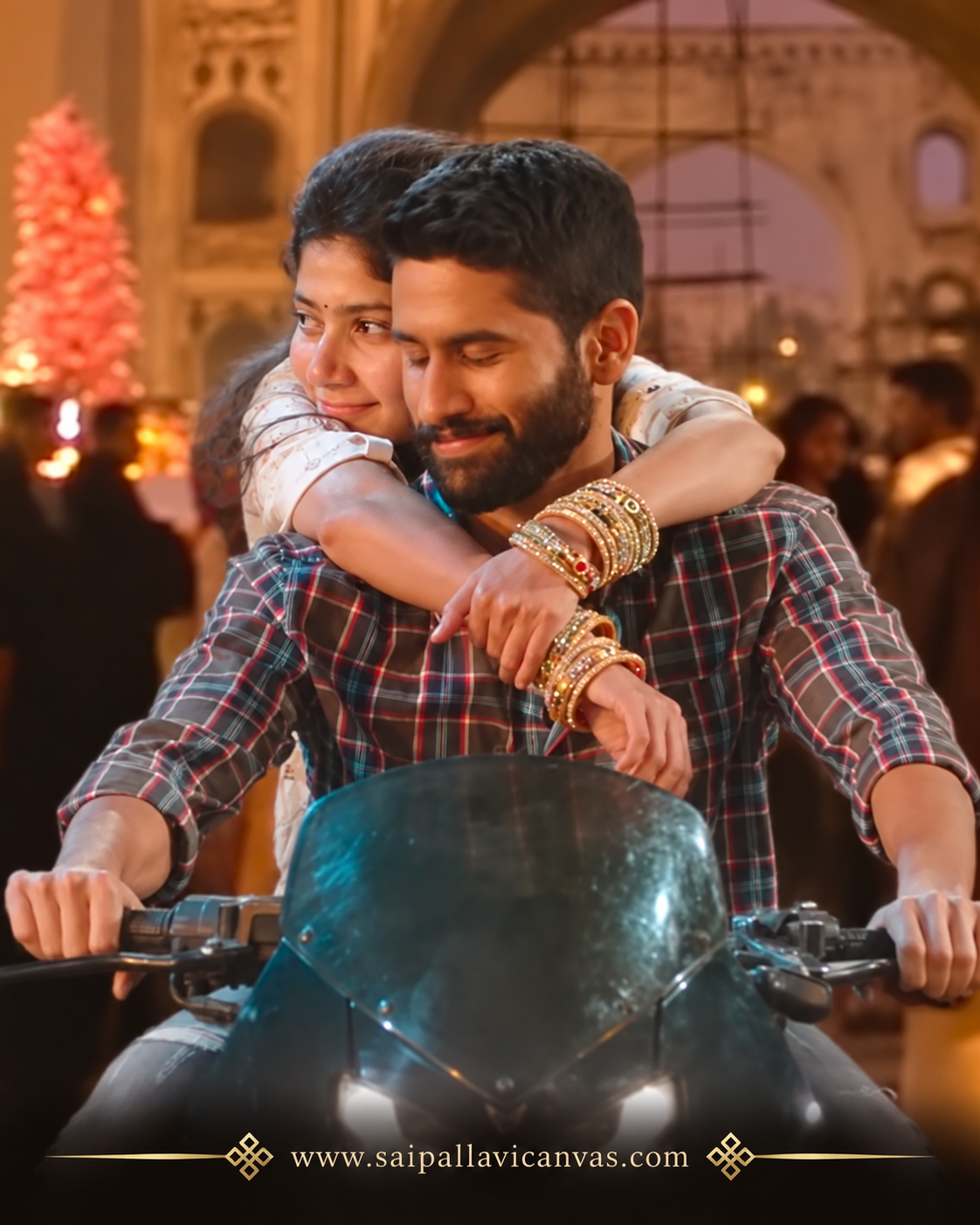
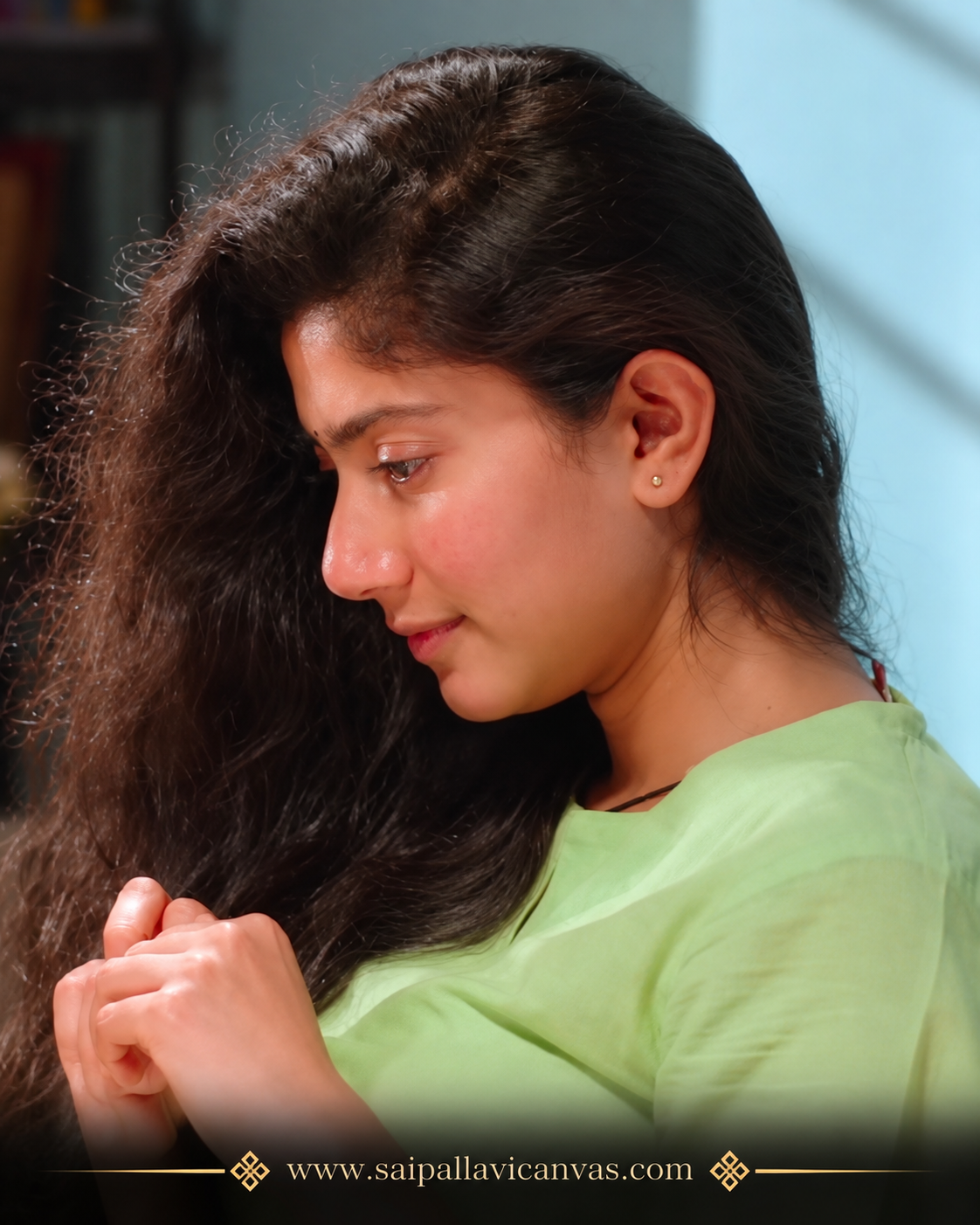
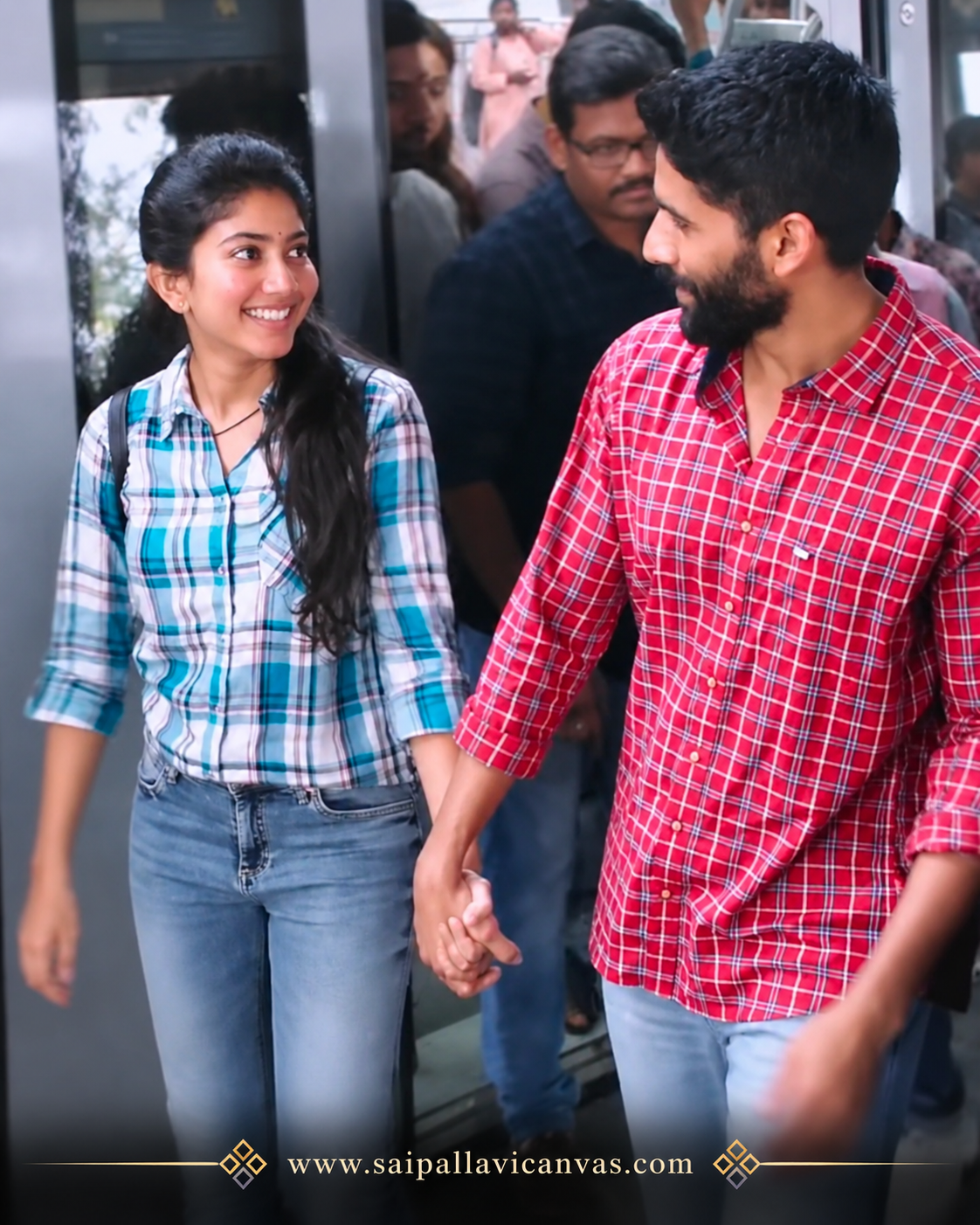
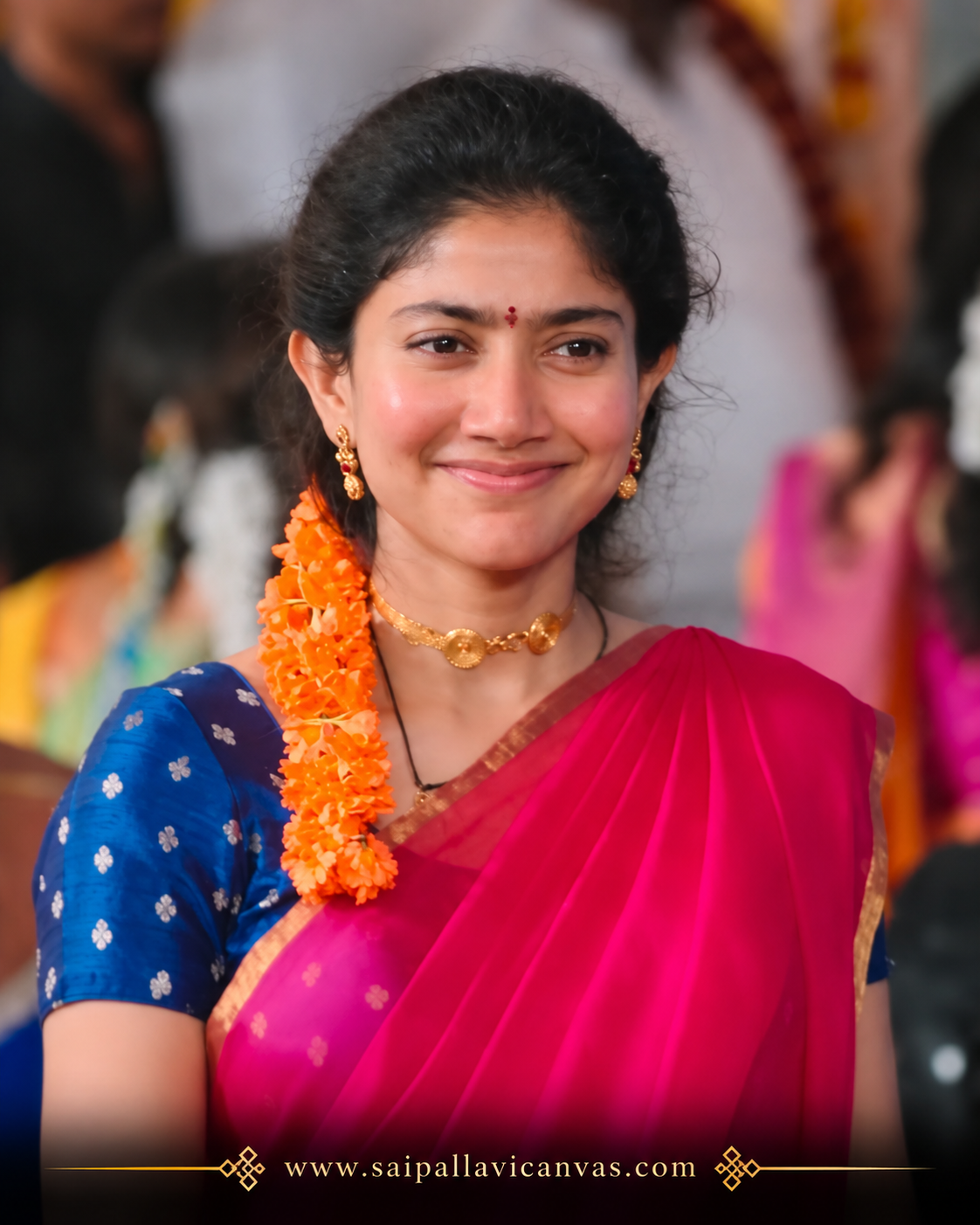
02CastingHow She Entered the Film
This was Kammula and Sai Pallavi's second film after Fidaa (2017). He did not treat that as an automatic yes. She has said he asked whether she liked the script; consent mattered to him. He did not expect her to take the part only because he had given her a Telugu breakthrough.
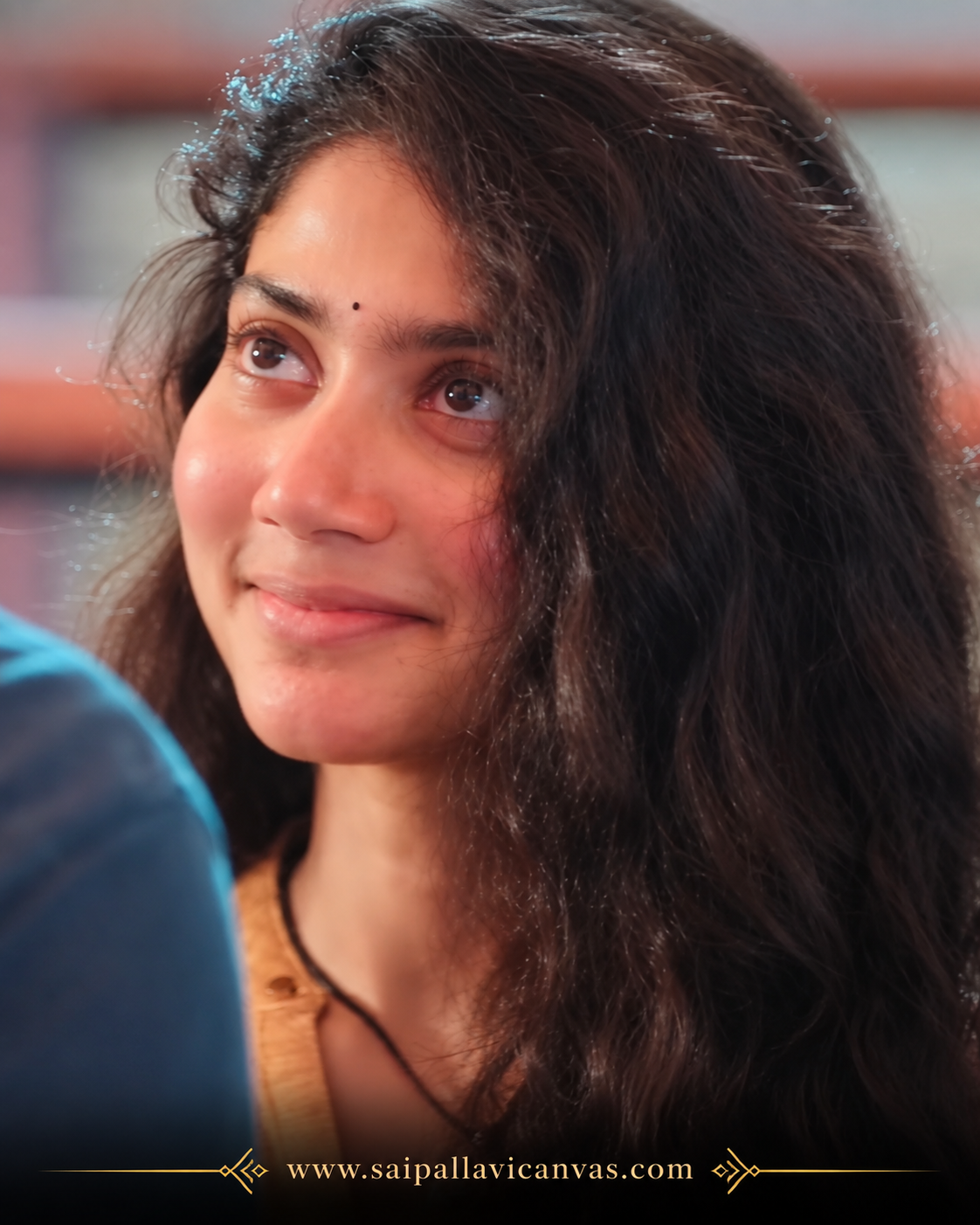
She said yes, and then worried about the opposite problem: that audiences would still see Bhanumathi. Kammula and she worked specifically to strip that hangover. Mounika is not the open-hearted village girl of Fidaa. She is an upper-caste young woman who comes to Hyderabad for a job, carrying family control, an abusive uncle, and an inner conflict the script does not flatten.
Did she like the script. That was the only question he asked before offering her the part.
Sekhar Kammula, on casting Mounika
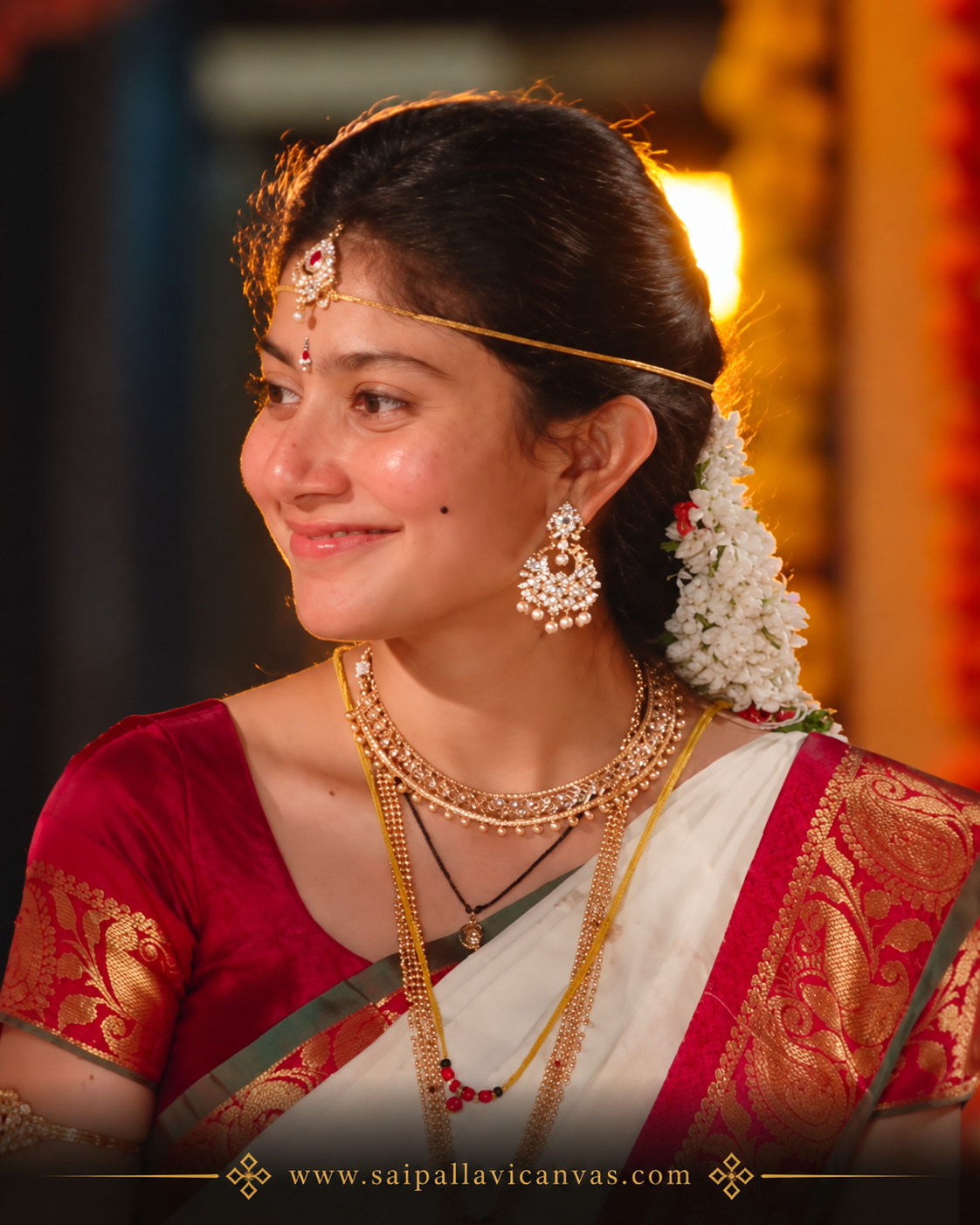
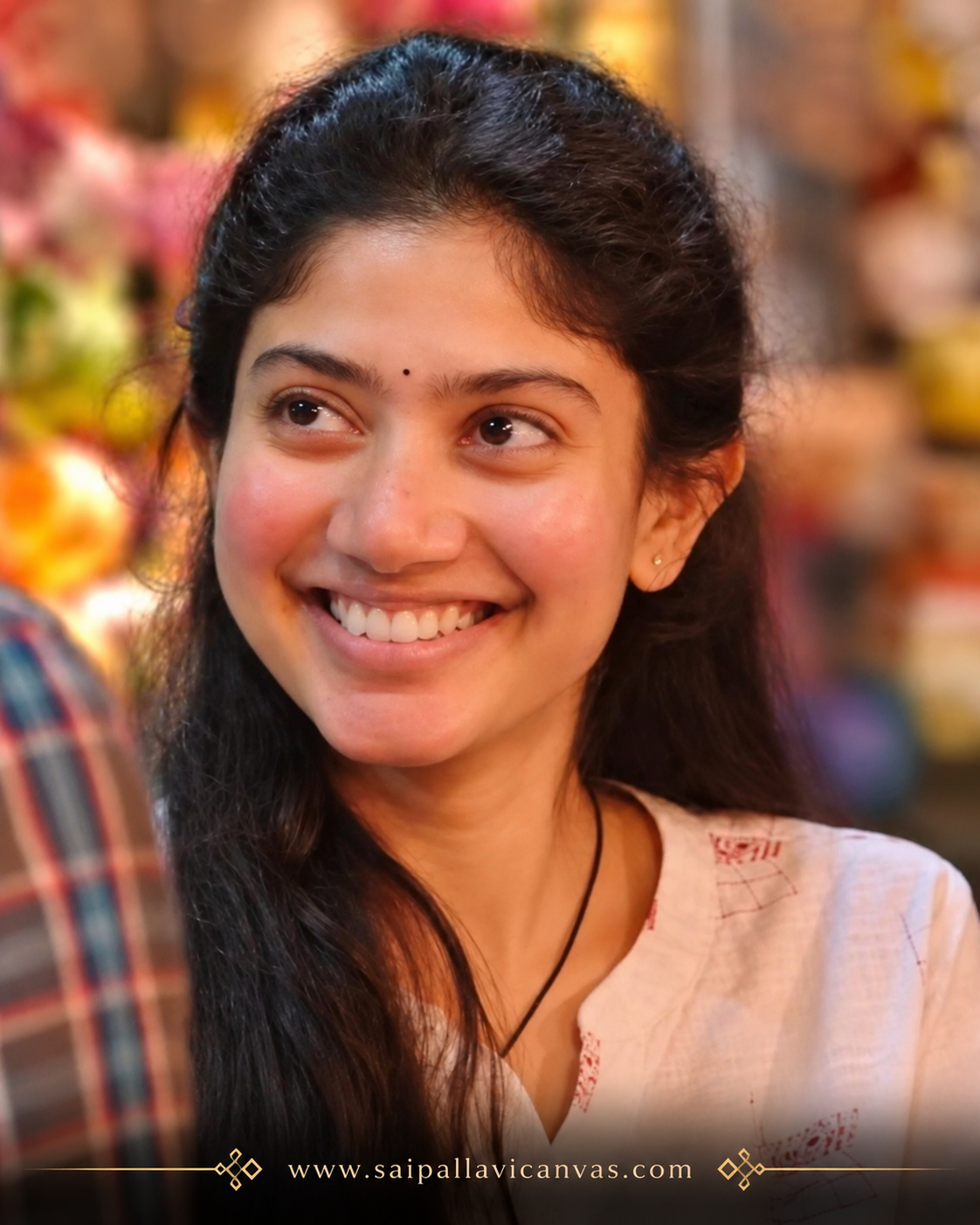
03The DelayCOVID: Shoot, Stop, Wait
Principal work was interrupted by the first wave. Shooting resumed in September 2020 and wrapped in November.
A Release Date, Postponed Four Times
Early 2020
An initial release date is announced, then quietly vanishes as the pandemic takes hold.
16 April 2021
A new date is set, then pulled as the second wave rises. Kammula and Chaitanya say publicly that a family film should not ask people into halls while cases are climbing.
10 September 2021
A Vinayaka Chavithi release is planned, then moved again.
24 September 2021
The film finally opens, Sai Pallavi's first major theatrical after the pandemic pause.
The Day Mounika Finally Arrived
After months of uncertainty, postponements and the pandemic, September 24, 2021 finally arrived. Even the release itself wasn't certain until the very end. The producers had chosen not to take Love Story to OTT, holding on to their belief that this was a film meant to be experienced in theatres. And then, on the previous day, the theatre lists were out. Love Story was finally arriving in theatres!
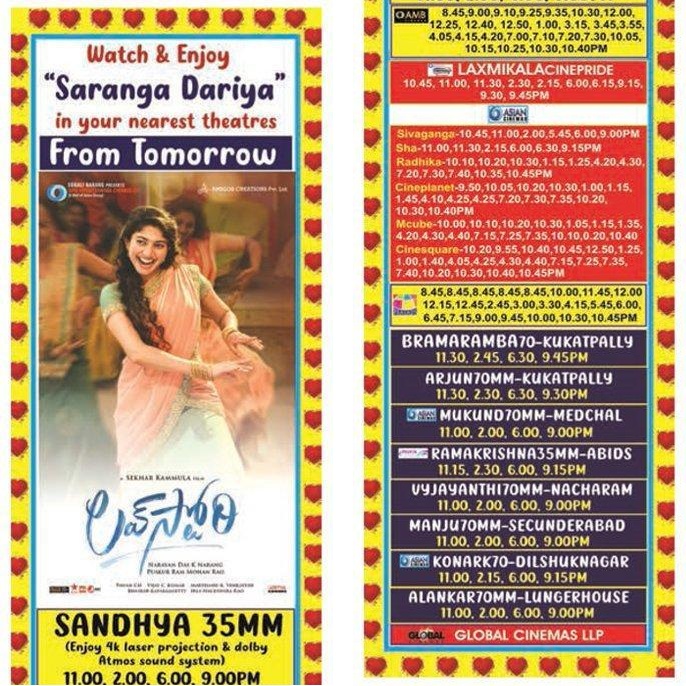
A piece of cinema memorabilia preserved and shared by Sai Pallavi fan Santhosh (X: @santhu0452). The original poster is a single, elongated frame, split into left and right halves for legibility, and presented here as one composite image.
For Sai Pallavi, it must have been an incredibly special moment. Mounika had stayed with her through the pandemic, multiple postponements and all the uncertainty. Now, suddenly, she was no longer a character waiting inside a film. She was on the big screen, in front of the audience. The lights went off, the film began, and the wait was finally over.
For the fans who had waited through every postponed date, that day was a celebration too.
"Today has been quite an emotional one for me and my #LoveStory team. Artists, Directors, Producers and Technicians from various industries prayed for the success of the film, and just like that, it wasn't 'our' film anymore. Here's proof that art and its audience are inseparable."
Sai Pallavi, on release day
Paava Kadhaigal had gone straight to Netflix on 18 December 2020, so this was genuinely her return to a dark hall, and one of the first big Telugu films to test whether audiences would come back at all. The numbers backed up the emotion in that post: India netted about ₹8.75 crore on day one, the highest figure since theatres reopened after the second wave, with the total run eventually settling around ₹95–100 crore against a budget near ₹30 crore.
Production Record
He let me take the earlier shot on late evenings because neither of us liked shooting deep into the night.
Sai Pallavi, on Naga Chaitanya
Chaitanya later said half the credit for his work belonged to Pallavi and Easwari Rao: she broke dance steps down for him; they rehearsed scenes, not only songs. She said he let her take the earlier shot on late evenings because neither of them liked shooting deep into the night. Small professionalism, visible on screen.

04CraftThe Performance
Mounika is written with layers Kammula himself flagged: aspiration, trauma, caste privilege on one side of the village and gender injury on the other. Reviews at release singled out how both leads internalised the parts, Chaitanya in a career-reset register, Pallavi without recycling Fidaa. The Hindu and Indian Express both treated the film as Kammula using a commercial frame to force a family audience to sit with caste, sexual violence, and the public's habit of looking away.
That is the performance worth marking at five years: not "she danced well," but that she played a woman who is not only loved, not only wronged, and not only brave. The character has to want a job, survive a household, fall in love across a line her family will not cross, and still remain specific.
A Hurricane and a Whisper
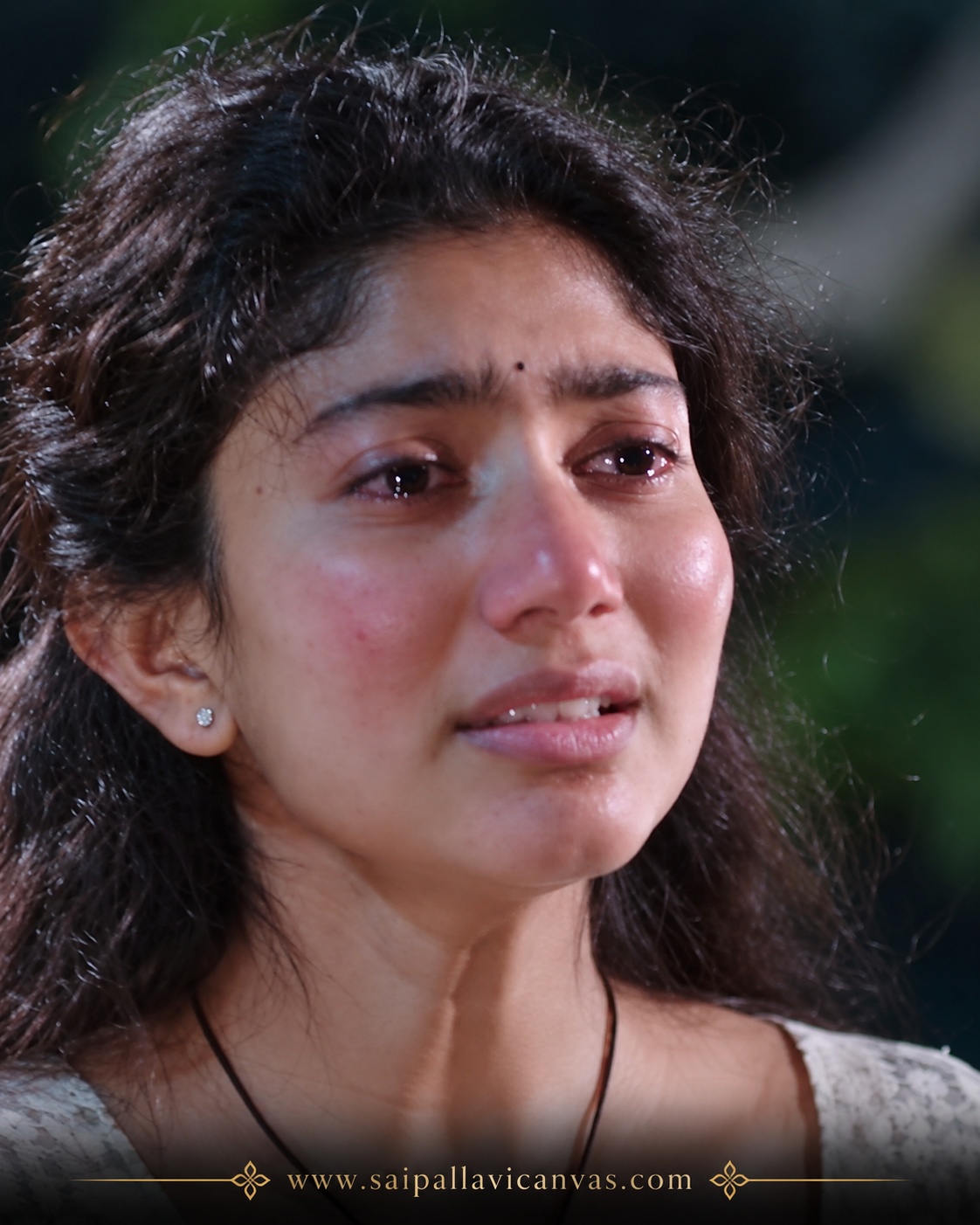
Kammula gave her a character that needed to be both a hurricane and a whisper, and she holds the two together with a precision that borders on effortless. While the film carries heavy themes, caste and childhood trauma among them, it is her performance that keeps it from ever tipping into a lecture. There is a particular exhaustion she brings to Mounika, a girl tired of being afraid, visible in the way she walks: shoulders slightly hunched, eyes darting, as if waiting for the other shoe to drop. Then come the moments of defiance, when she looks her uncle, or the world, in the eye, and the inner steel she is now known for surfaces without announcement.
The Dance as Release
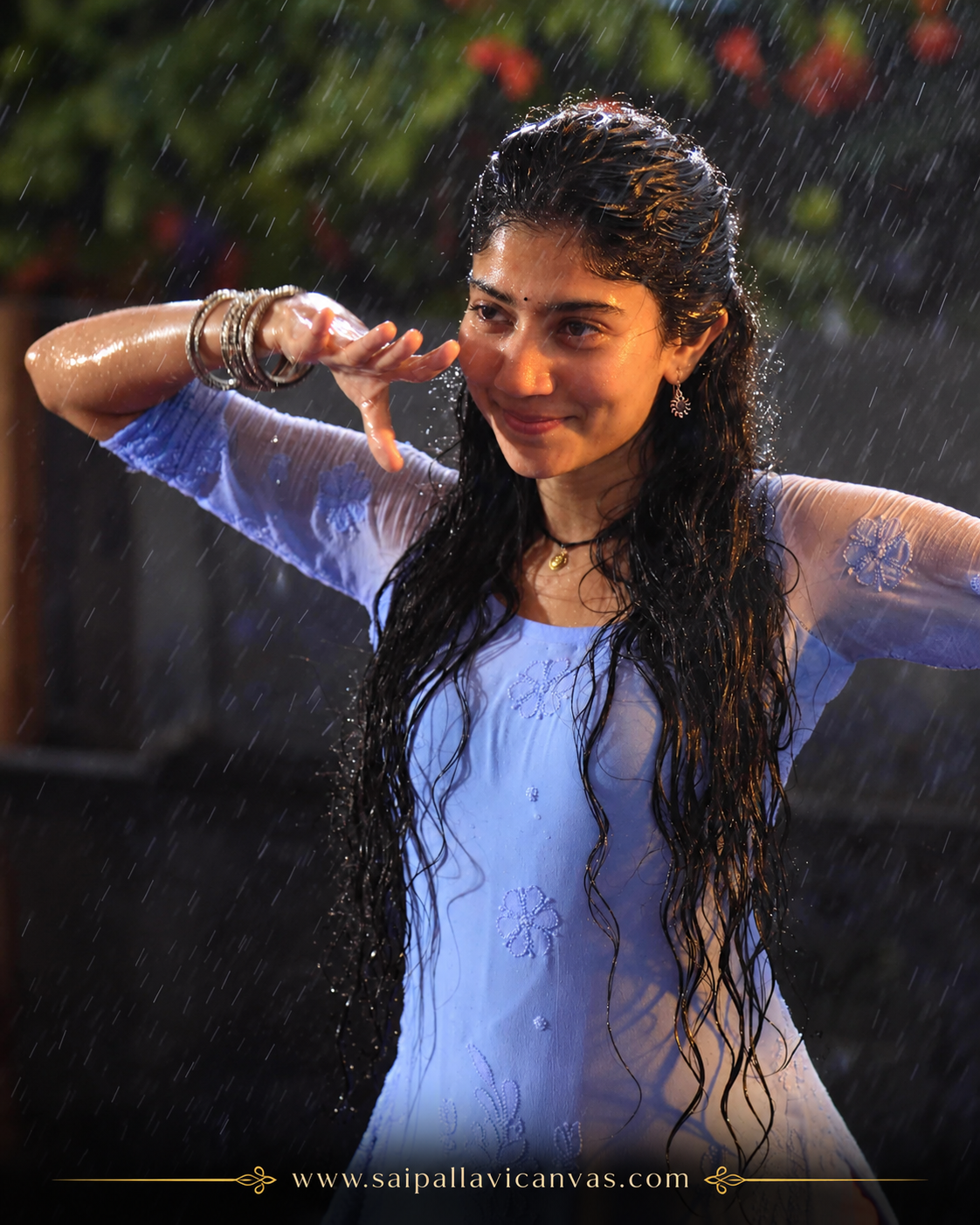
That same restraint breaks open in Saranga Dariya. It plays less like a choreographed number than a release, her reclaiming her own space and her own body with every beat, the same uninhibited energy audiences already knew from her, now reframed as something closer to rebellion than celebration.
An Honest Chemistry
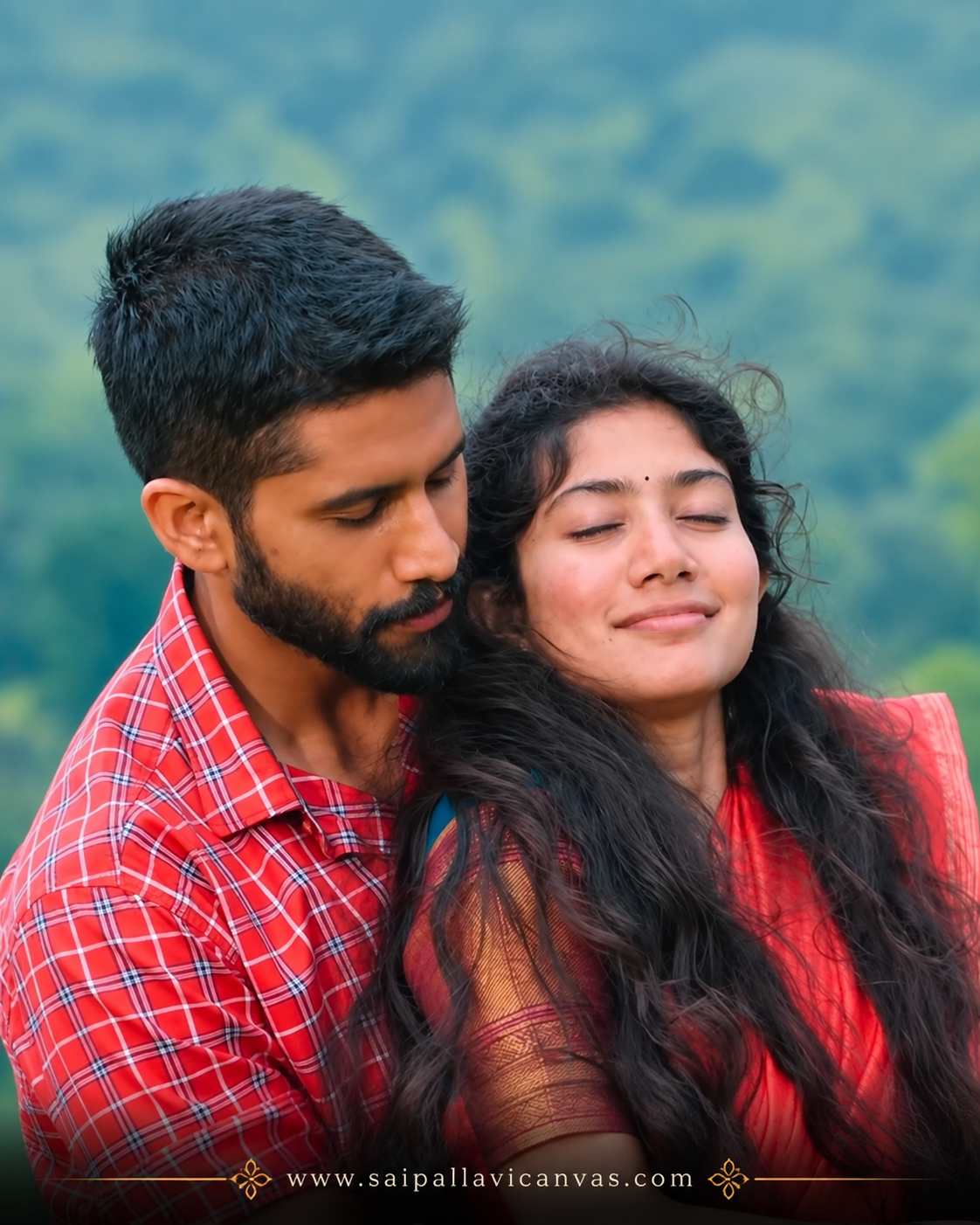
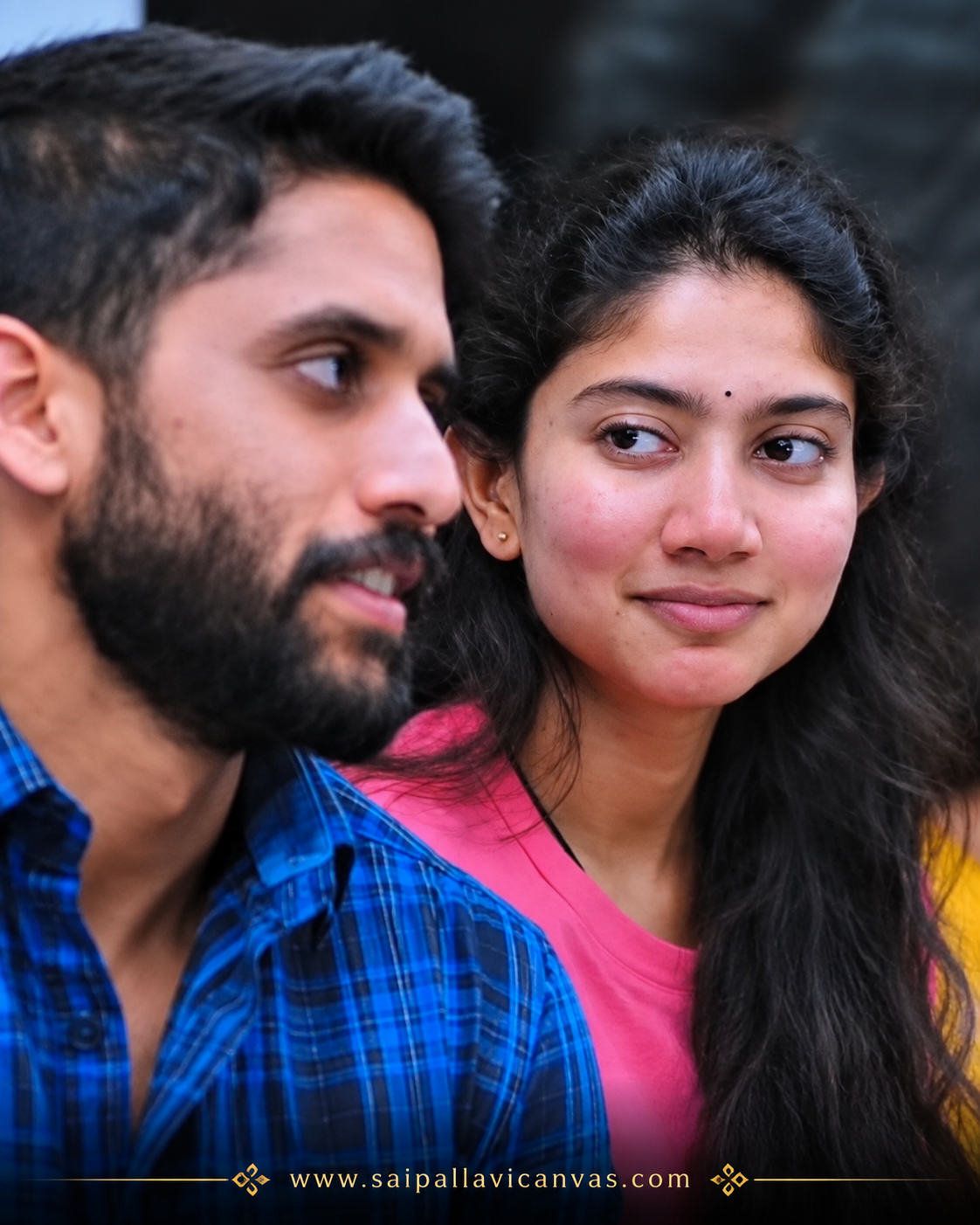
Her chemistry with Naga Chaitanya adds another honest layer, built on the shared experience of two outsiders finding their footing in the city. She plays Mounika's vulnerability with tenderness: the hesitant way she starts to trust Revanth, the way she leans on him once the world gets too loud. It rarely needs a grand cinematic gesture; it shows up in how she listens, or in how her expression softens when the two are finally alone.
Choosing to Look Real
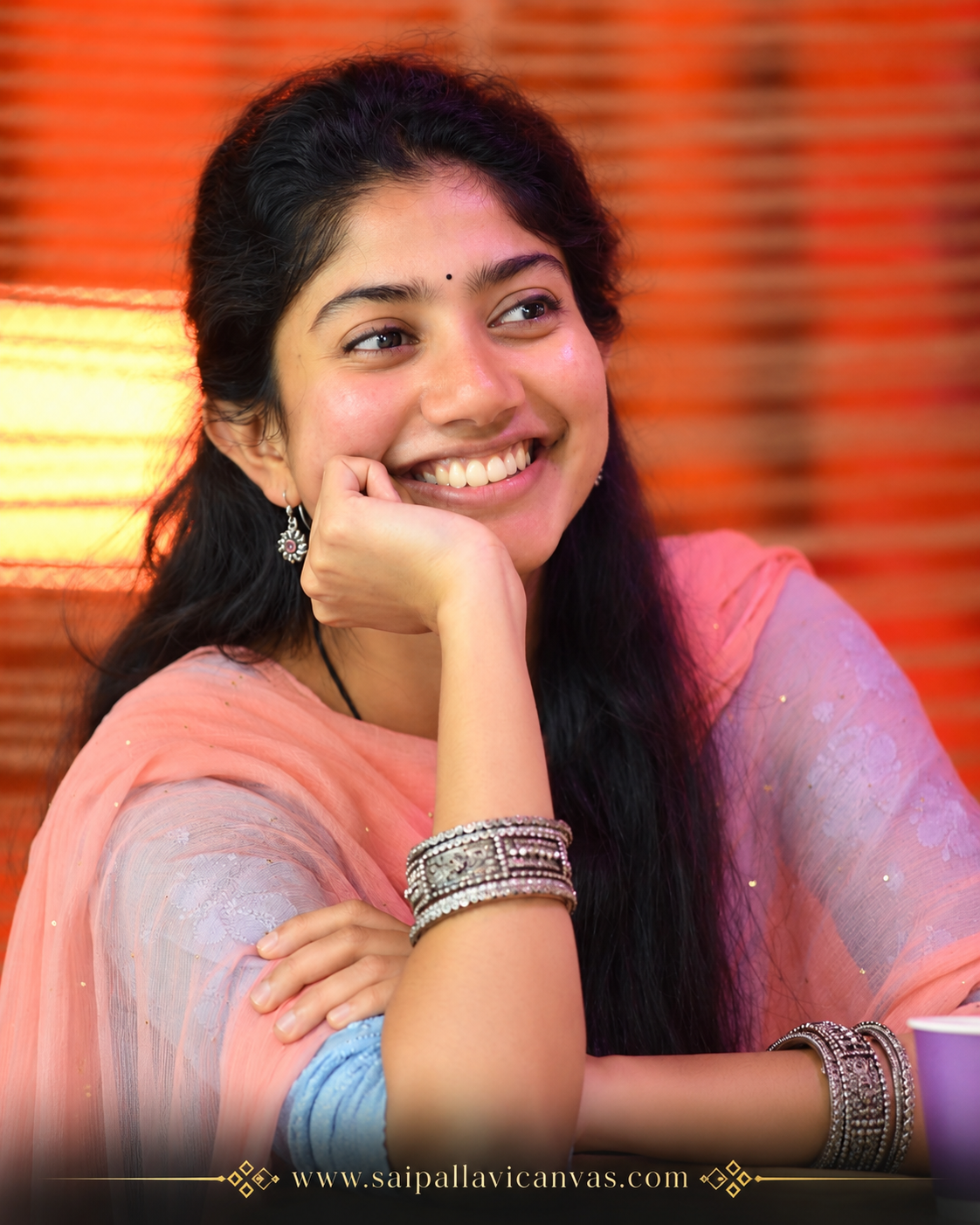
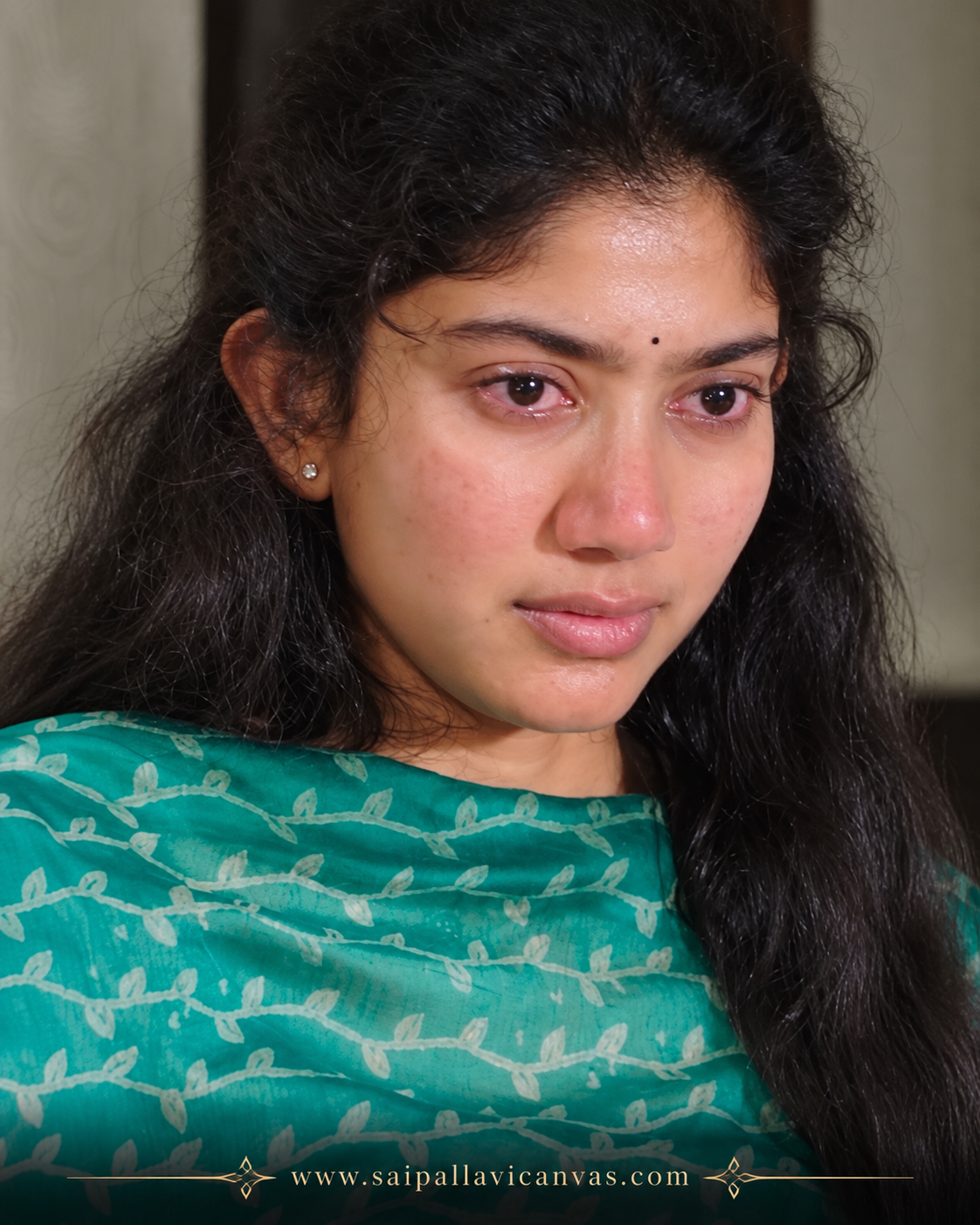
Much of that honesty comes from her refusal to look photogenic over real: minimal makeup and unkempt hair through most of the film, because that is what the character calls for. When she finally breaks her silence in the climax, it lands less on the dialogue and more on the plain emotional honesty she pours into the moment.
What the Performance Leaves Behind
Love Story ultimately shows how much respect she brings to a character's pain and joy, enough that Mounika starts to feel like family. Her struggle becomes the audience's struggle, and her eventual escape reads like a shared relief. It is a performance that does not stay on the screen; it gets under the skin.
A Closer Read
Bhanumathi vs. Mounika
Mounika is Sai Pallavi working in a lower register than Bhanumathi. Bhanu announced herself: volume, gait, open refusal, a laugh that filled the frame, the Telangana bite worn as armour. Mounika cannot afford armour. She arrives in Hyderabad already folded, an engineering graduate who fails interviews, a girl who will not take pamphlet work because pride is the last thing she owns, a niece who has learned to go quiet under an uncle's shadow.
Pallavi builds her from small refusals rather than speeches: the pause before she accepts Revanth's partnership, negotiating salary like a form of dignity, a casteist flash followed by collapse, jewellery offered without theatre, the faint before Narasimham, the stillness when she finally names the abuse. Technique-wise she strips the Fidaa hangover: less projection, more listening, eyes that calculate rooms, a voice that thins in fear and steadies only to protect someone, dance turned livelihood before it turns, in Saranga Dariya, into brief weather.
Where Bhanu moved through space as if it belonged to her, Mounika measures it: how much to take, how much to leave, when to run, when to stay. That is the difference. Bhanumathi was a declaration. Mounika is a decision, taken again and again, in a face that never asks the camera to love her for being brave.
05The SongSaranga Dariya
The song did the cultural work the plot could not do alone.
It is a Telangana folk piece long sung in fields and on television; Komali Tatte had popularised a version, and Suddala Ashok Teja, who had heard her, wrote the film lyric. Pawan Ch composed it. Mangli sang it. Choreography is credited to Sekhar.
"Saranga Dariya"
A Telangana Folk Line, Re-found
The lyrical video dropped on 28 February 2021. Pallavi, in half-saree, dances as if the folk line was always waiting for her body. Samantha unveiled it; Aishwarya Lekshmi asked if there was a bone in Pallavi that did not dance.
It became one of the fastest South songs to 100 million views; by release day it was being reported past 300 million. Rowdy Baby is the only useful comparison, and that, too, is her. The number is not the point. The point is a folk woman's song entering a caste-romance without being prettified into item grammar.
06The LedgerAwards, and What They Measure
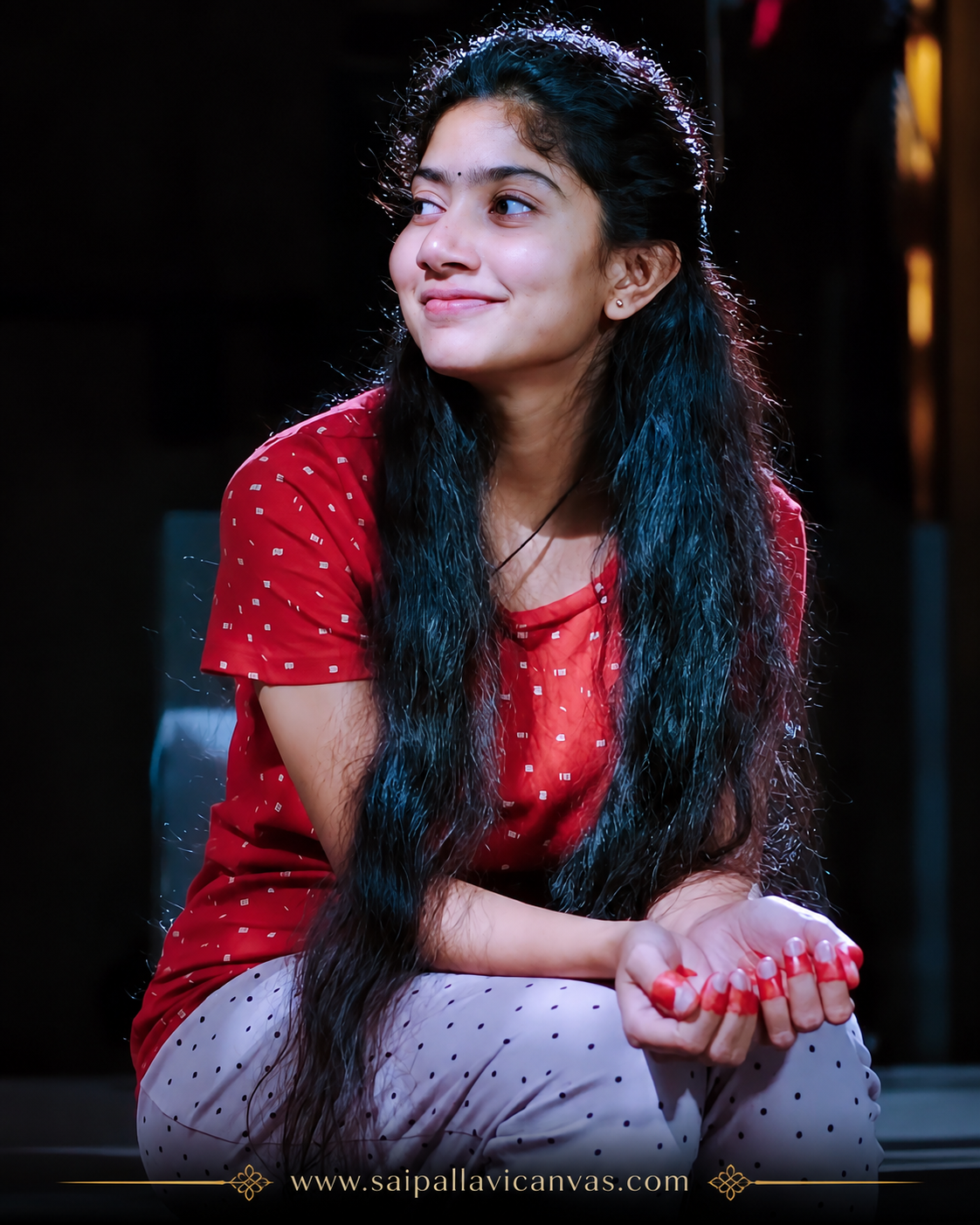
She used the stage to thank writers who write women with spine, and Kammula by name. Awards are a ledger, not the film. The film's afterlife is simpler: people still hum Saranga Dariya, and the caste-gender argument did not expire in 2021.
Recognition, Five Years On
67th Filmfare Awards South
Best Actress – Telugu, Love Story
Also won Critics Best Actress – Telugu the same night, for Shyam Singha Roy.
SIIMA
Entertainer of the Year (Female), for Love Story and Shyam Singha Roy
Behindwoods Gold Medals
Best Actor in a Lead Role – Female (Telugu), for Love Story & Shyam Singha Roy
07Behind the FrameInteresting Facts
The Kiss Was Not a Kiss
After release she said she does not act kissing scenes, Kammula did not push her, and the shot was framed so the camera implied contact. Fans thought they had seen one; she said they had not.
Turmeric With Village Grandmothers
Fidaa was Banswada; Love Story village work was around Armoor, Nizamabad. She sat under a tree with older women who did not treat her as a star. A scene needed her to harvest turmeric; they taught her, then gifted her home-ground turmeric. She said the warmth made her want to stay.
Afraid Audiences Would Still See Bhanumathi
Same director, same dialect belt. She worried Mounika would look like a second Bhanu. Kammula said they worked specifically to kill that hangover because Mounika's conflict is internal, not the open Fidaa register.
She Taught Chaitanya the Hard Steps
He said it in The Hindu: he is not a strong dancer; she broke complex moves into simpler ones. Rehearsals were for scenes as well as songs. He credited half his performance to her, Easwari Rao, and Kammula. She answered that if she ever needed an action scene, she would need him, and that on late evenings he let her take the earlier shot because neither likes night work.
Women on That Set, on Purpose
Same Hindu interview: she pointed to women assistant directors doing heavy work, including crowd, and said a mixed crew changes how men behave. She tied that to Kammula teaching her to stand up when something is wrong, patriarchy as daily "normal."
The Only Lead He Repeated After Kamalinee Mukherjee
Kammula said that himself: after Anand / Godavari with Mukherjee, Pallavi is the only heroine he used in consecutive films. He also said her professional approach had not changed; only the audience had seen more of her.
Launch Was a Tirupati Puja
Formal start was at the Venkateswara temple on 27 June 2019, long before COVID froze the calendar. The title was still tentative then; Love Story was locked in January 2020.
What Kammula Publicly Promised About Her
Before release he said Chaitanya would speak Telangana dialect and Pallavi "could spring a surprise." That was the official tease, not dance, dialect texture.
08The MakingBehind the Camera
Cinematography
Vijay C. Kumar, Kammula's regular cinematographer, shot Hyderabad city life, Armoor and Telangana village textures, Dubai, and the Bodakonda Falls song. Reviews generally praised the rooted, warm frames; some criticised the CGI, especially around the Purana Pul bridge. The editor was Marthand K. Venkatesh, another long-time Kammula collaborator.
Music
Pawan Ch scored the film in his first feature as composer. An alumnus of A. R. Rahman's KM Music Conservatory, he had been rejected by Kammula earlier, including for Fidaa; a rough version of "Ay Pilla" finally got him the job. The songs went through multiple versions before being finalised, and Rahman himself publicly wished him luck. The soundtrack was released under the Aditya Music label.
Choreography
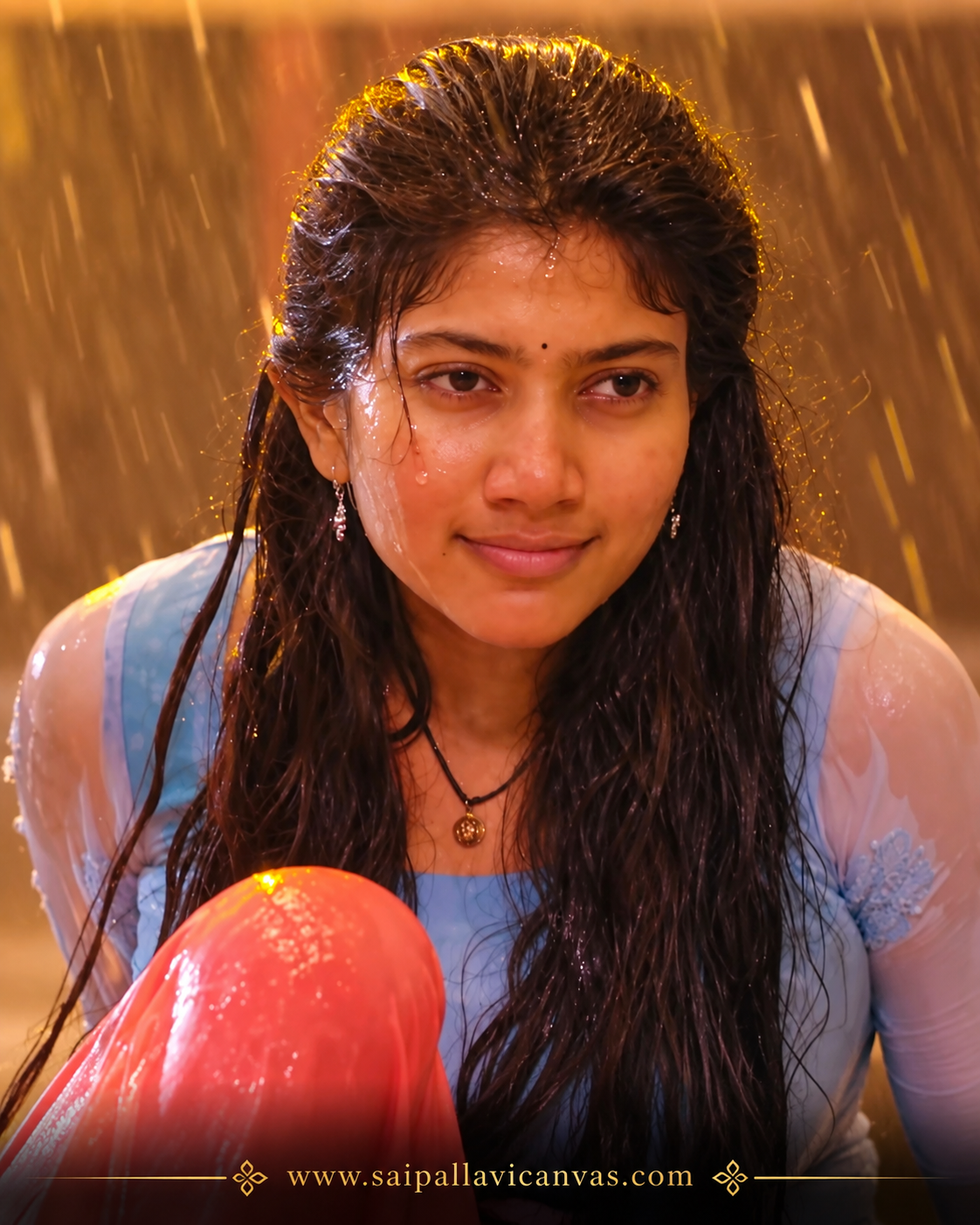
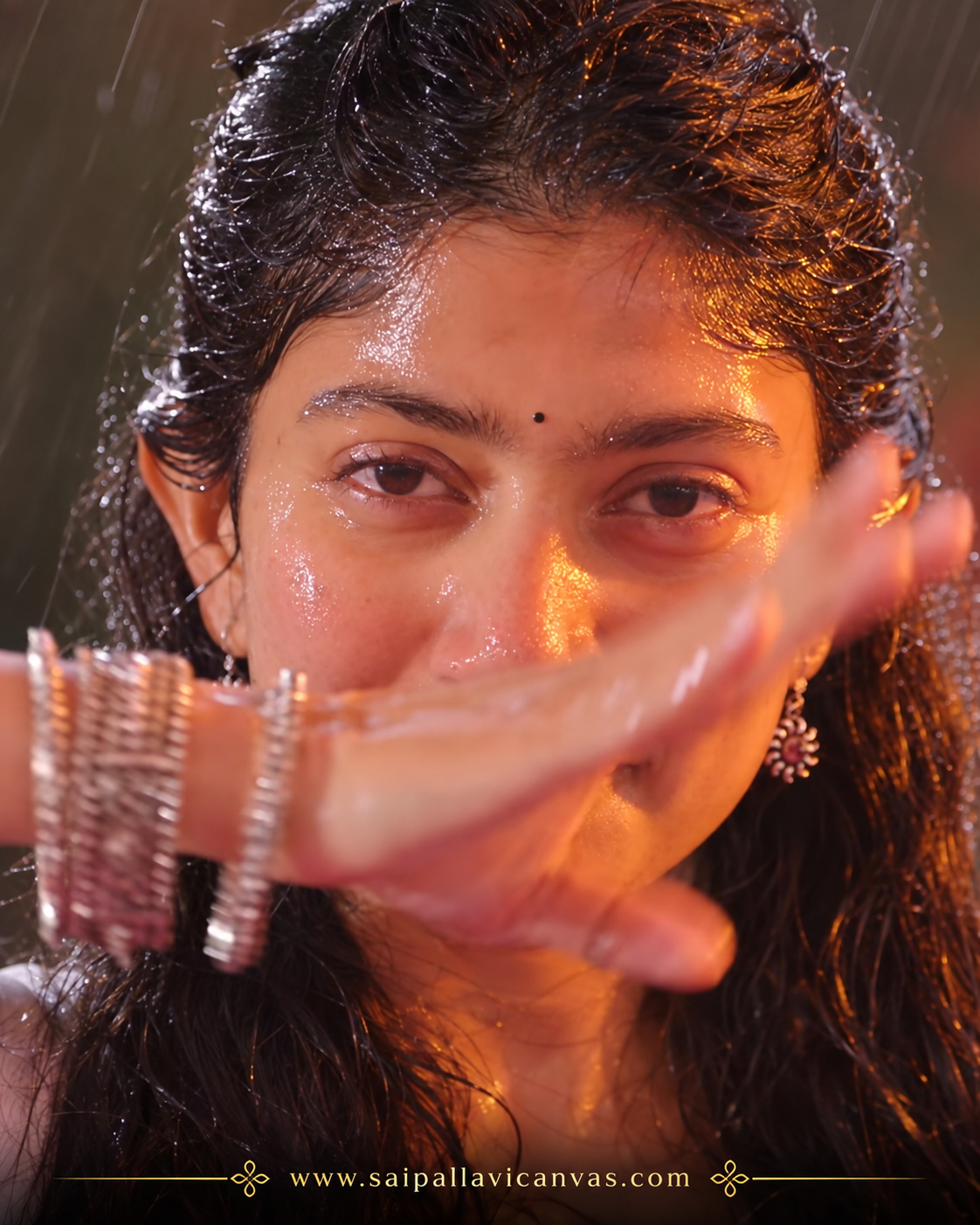
Sekhar Master, also known as Sekhar VJ, was the film's main choreographer, handling two full songs and three bit numbers. Kammula wanted movement that felt natural rather than staged. Naga Chaitanya, a trained Zumba instructor, appears in three bit pieces; Sai Pallavi has two full songs, including a rain number and "Saranga Dariya," a mix of folk and cinematic style shot in about three days. Sekhar Master had earlier choreographed "Vachinde" in Fidaa. Production accounts also say Pallavi choreographed one song herself. IMDb credits dance assistants under Sekhar, along with a separate credit for Anee. "Saranga Dariya" became the film's signature dance number.
09The Closing Remarks
Five Years On
She sat under a tree and let grandmothers teach her something. That's still who she is off camera too.
Five years on, she's still the one directors write the harder part for.
24 September 2026
Sources & Citations
- The Hindu — cast and crew interviews, production and release coverage of Love Story (2021)
- The Indian Express — review and analysis of Love Story's treatment of caste and gender
- Trade and box office reports on Love Story's opening weekend and total theatrical run
- Official statements by Sekhar Kammula and Naga Chaitanya on production delays and release postponements
- Interviews with Sekhar Kammula on the writing process, casting evolution, and his influences behind Love Story
- Crew and production interviews covering cinematography, music composition, and choreography credits
- 67th Filmfare Awards South, SIIMA 2022, and Behindwoods Gold Medals award citations
- Public statements by Sai Pallavi in press interviews on the making of Love Story
- YouTube and streaming platform view-count data for "Saranga Dariya"