What Sita Actually Wears
A close reading of Sai Pallavi's palace cloth, temple gold, and the forest that takes both away
The argument over Sai Pallavi's Sita did not begin with a stitch count. It began with a feeling: that the blouse was too modern, the drape too bridal, the look too close to calendar art, or not close enough to Treta Yuga.
What has kept us grounded is our honesty towards our craft.
Ramayana serves as a guiding light for generations.
Palace gold,
forest earth
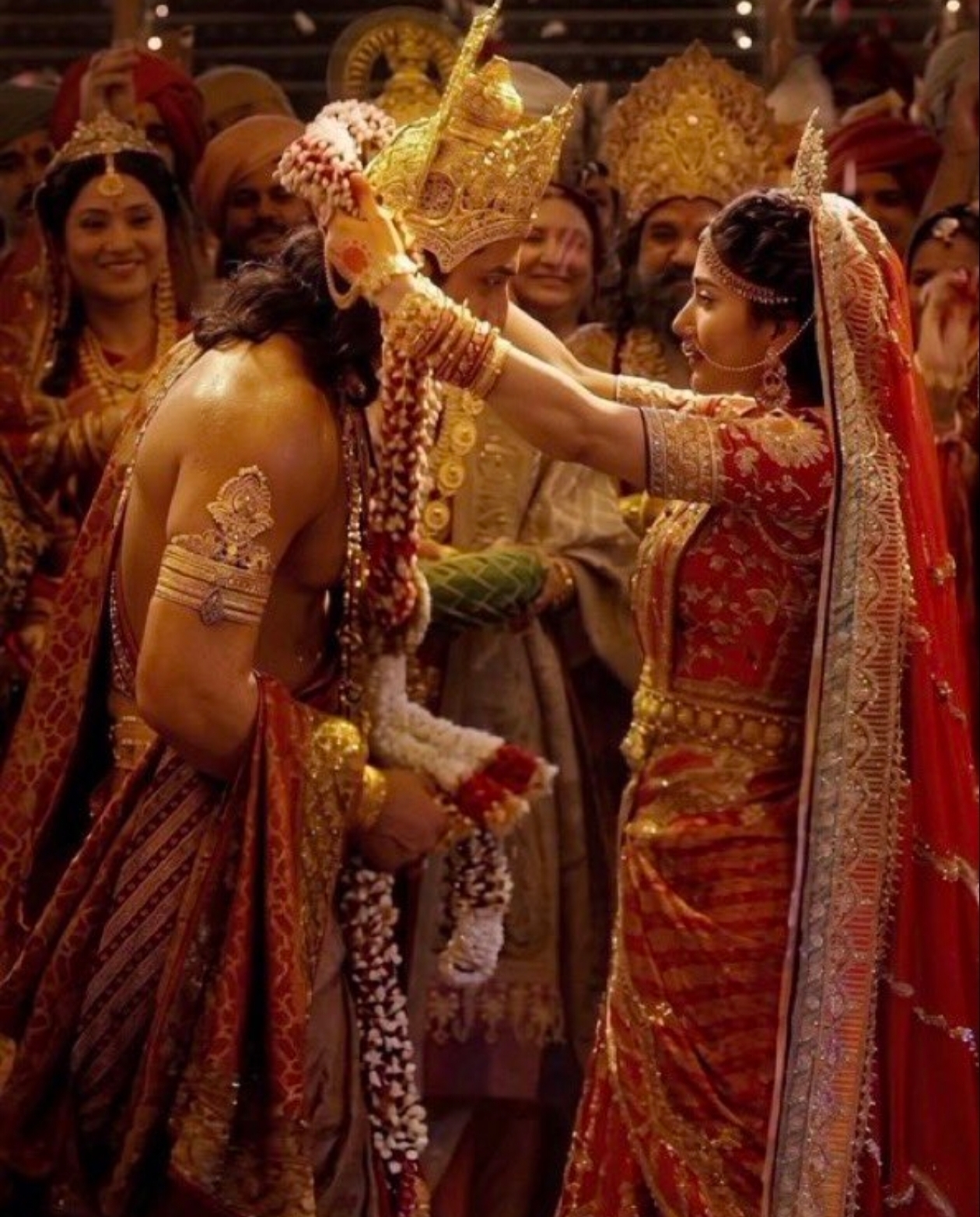
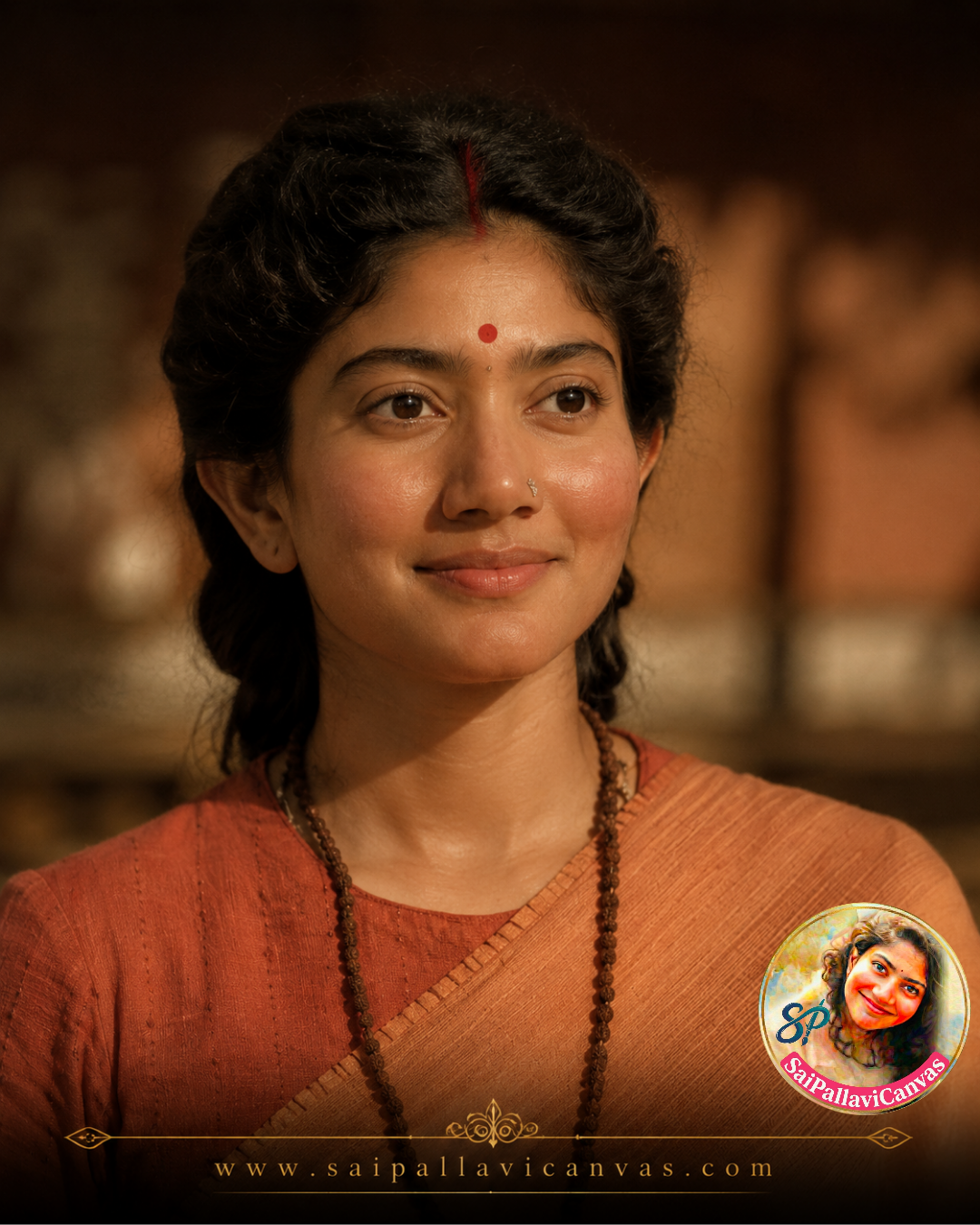
The released images give Sita two distinct visual worlds. In the palace and pooja frames she is dressed as the goddess of a North Indian mandir painting: Banarasi-weight red and coral, heavy temple jewellery, alta, a silhouette that reads as bridal only because Indian devotion has long dressed Sita that way. In Vanvas the gold drops away. The saree turns terracotta or peach, the cloth looks crushed and lived-in, the ornaments thin to rudraksha-like beads and almost nothing else. The face does not change. The wardrobe does.
The costume should support Sita, never become louder than Sita.On the design intent
The Sita already
in the mandir
Rimple Narula has said the brief in public, without decoration. When she closes her eyes and thinks of Goddess Sita, she does not begin with an archaeological reconstruction of the Treta Yuga. She begins with the image that has lived in her consciousness: the goddess sitting in the mandir.
She has also said there are no preserved garments from that period to copy. What people have grown up seeing, in her words, is calendar art, miniature paintings, temple imagery and Raja Ravi Varma's interpretations. That memory is what the film chose to meet. Interpretation is not a failure of research. It is the only honest starting point.
That choice explains why the palace Sita looks “bridal” to some viewers and “correct” to others. Indian devotion has dressed Sita in silk and gold for generations. The film did not invent that picture. It walked into it.
When I close my eyes and think of Goddess Sita, I don't think about archaeological authenticity. I wanted my Goddess, the one sitting in my mandir, to look like the image that has lived in my consciousness. That was a deliberate choice.Rimple Narula · Costume Designer
The palace Sita carries the image temples already know. The forest Sita carries the same identity, without the gold.On the palace and Vanvas contrast
What the cloth
actually shows
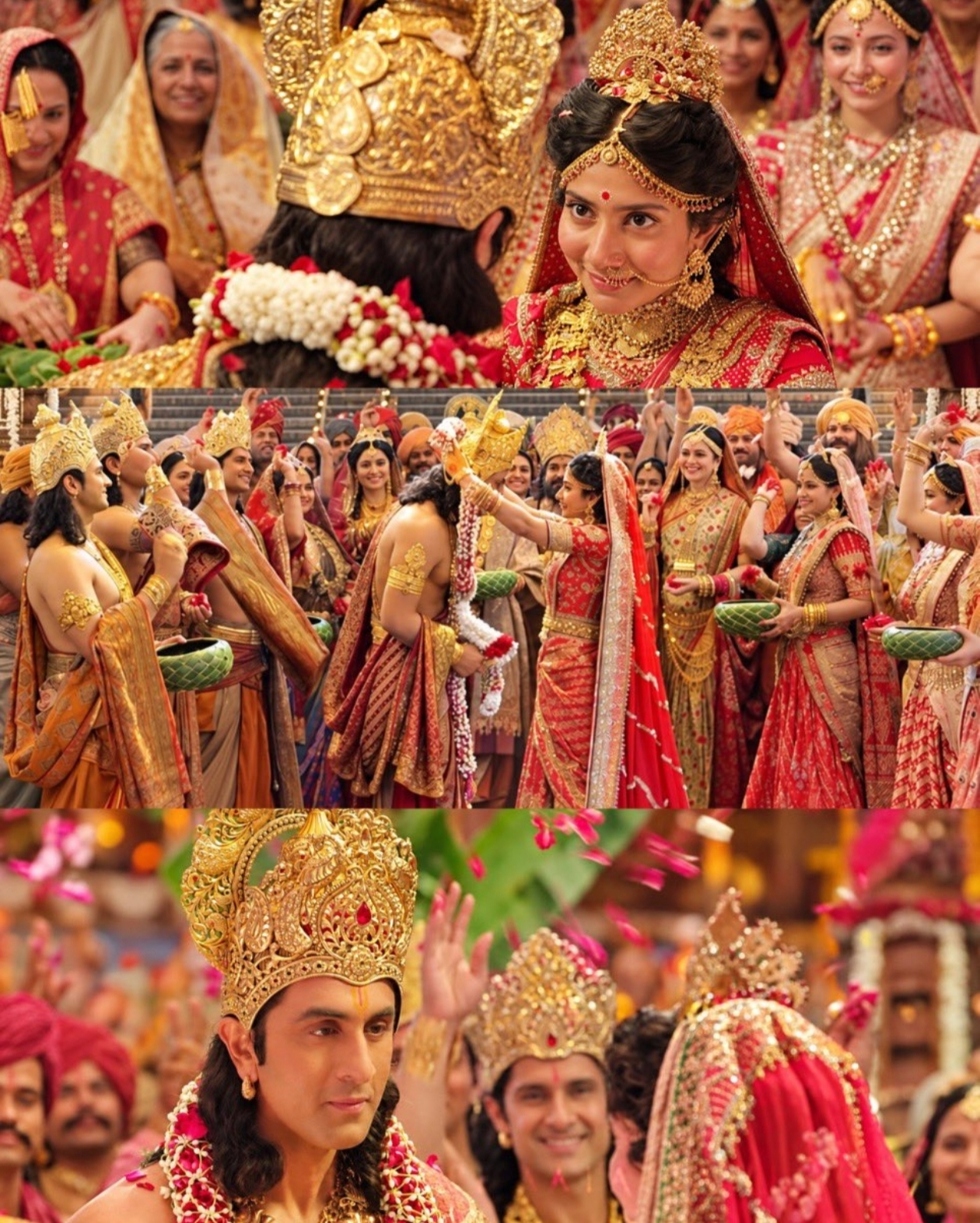
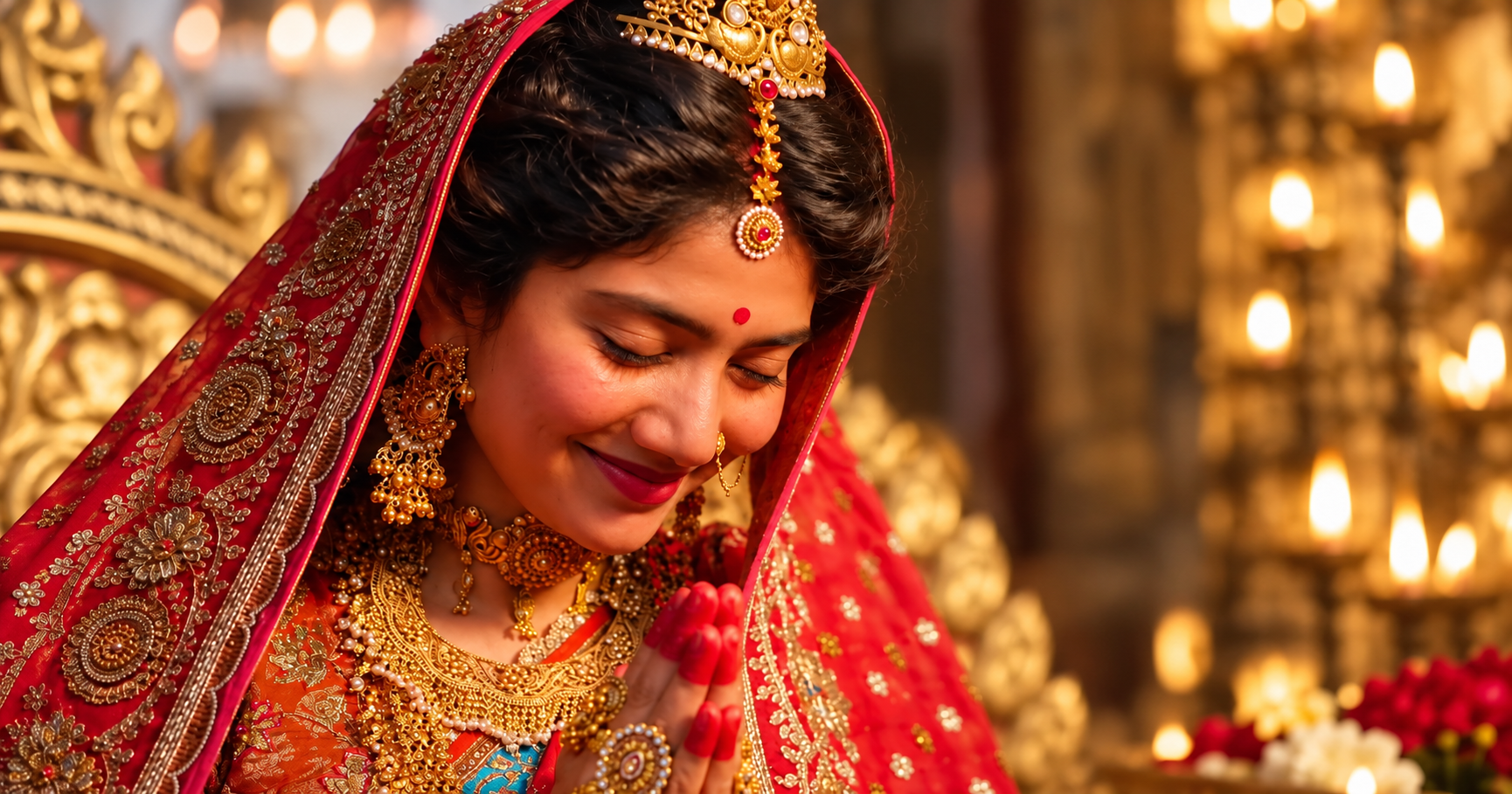
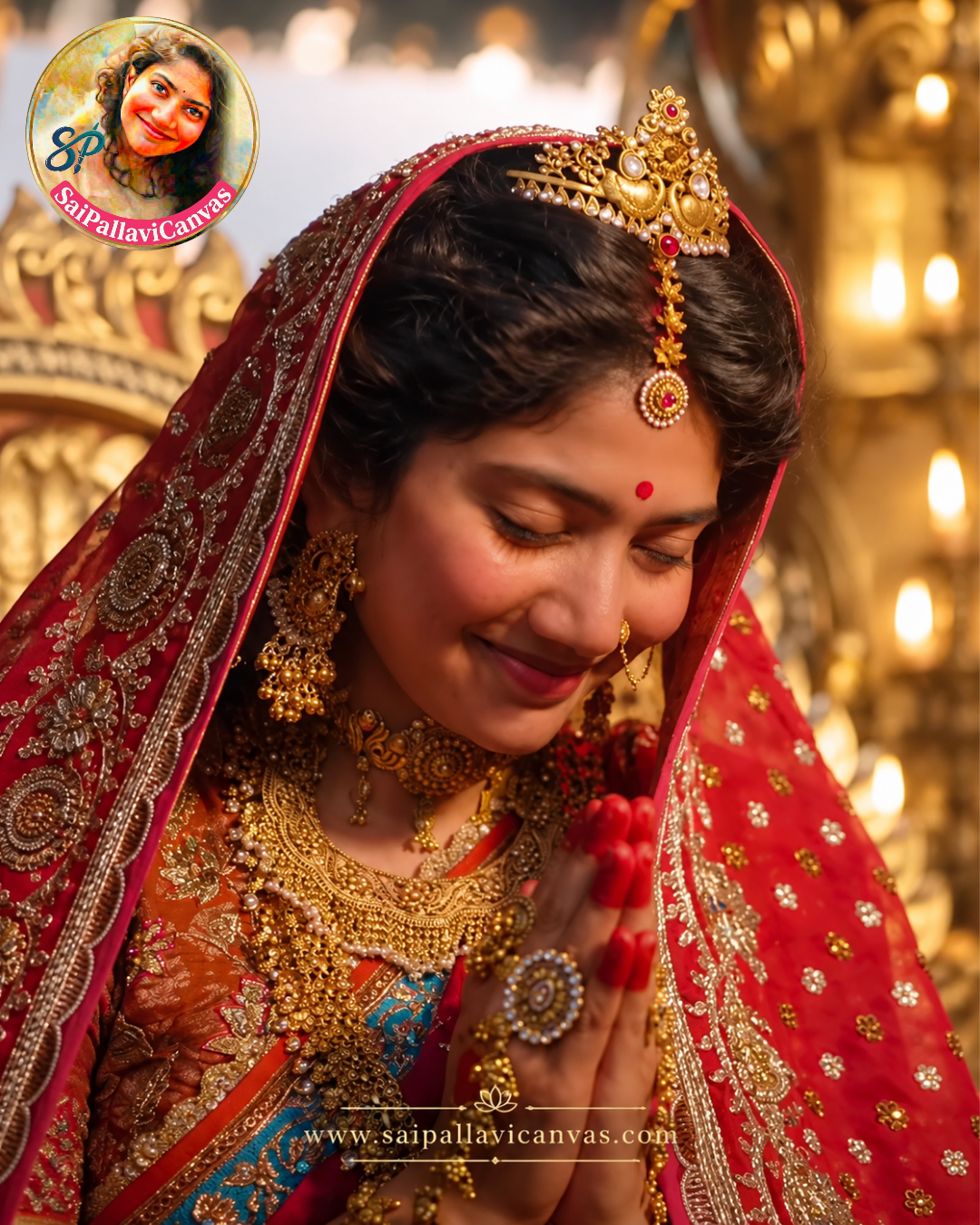
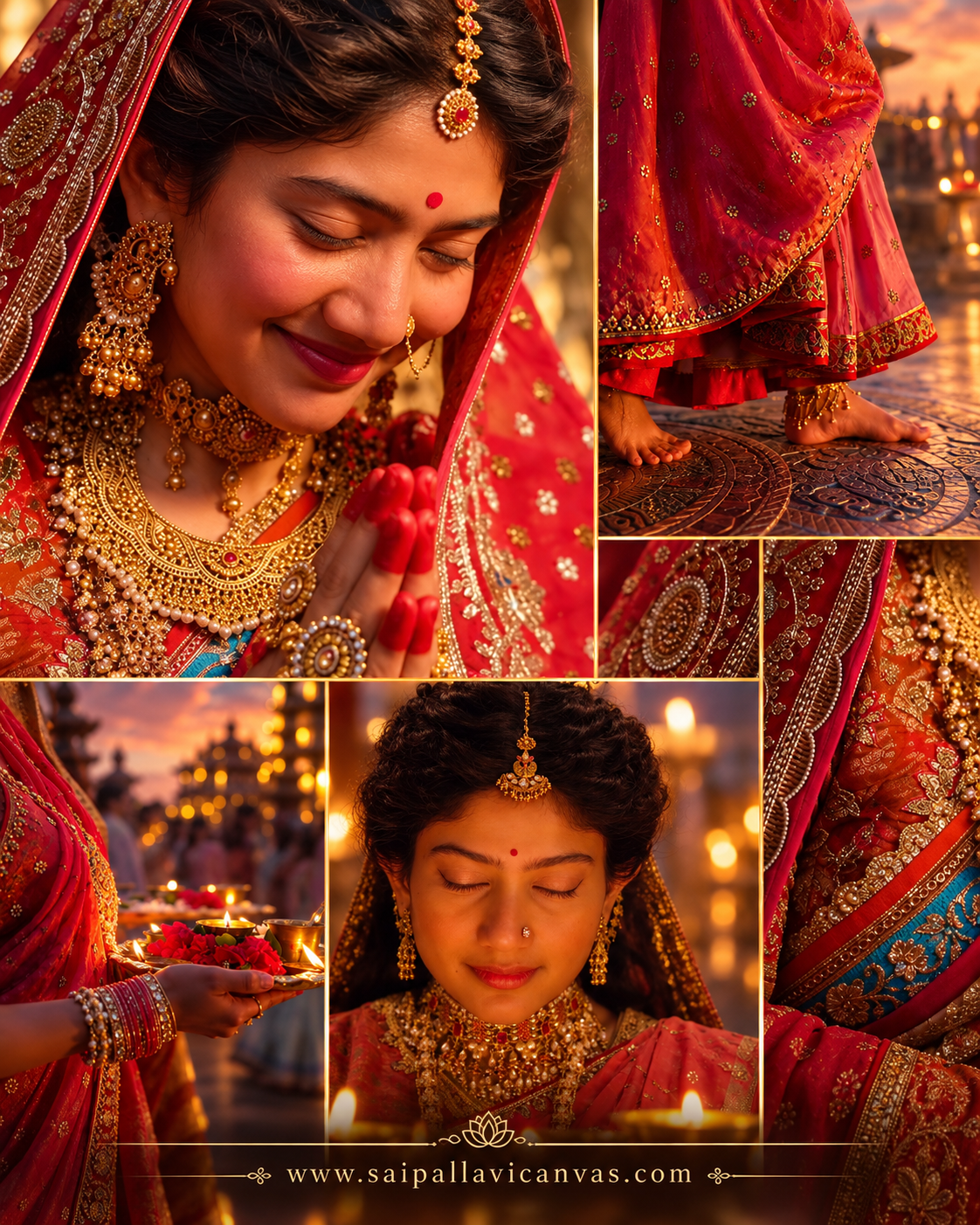
Stand close to the prayer and wedding stills and the vocabulary is specific. The pallu is red to coral-pink, some of it sheer enough for light to pass. Across the field sit small scattered floral butis in gold and cream, regular, decorative, not narrative scenes. The borders are heavy zardozi and gota: vines, paisley and kalga forms, circular medallions, leaf work in raised gold and silver thread.
Under the pallu the layers keep speaking. A rust-orange inner panel or blouse carries gold floral embroidery and pearls. A strip of teal or peacock blue runs as a contrast border. The hands are stained with alta. The jewellery is temple grammar: layered gold, pearls, rubies, a nath or nose ring, maang tikka or a star-flower mukut in the pooja frames, stacked bangles, payal at the ankle when she walks barefoot on carved stone.
Rimple has spoken of hand-woven Banarasi silk for Sita, embroidery in sucha gold, vegetable dyes, and a vermilion red chosen as a colour of divinity. The stills match that brief more closely than they match any single folk-painting school. What the eye meets is North Indian court-and-temple dress as cinema has long imagined it: dense, auspicious, built for close-ups of devotion rather than for a textbook reconstruction of an unrecoverable century.
The blouse that drew so much noise is part of that same picture. The designers have said it was not added to modernise her. The silhouette was meant to stay graceful, understated, recognisable. In the palace frames it sits under the jewellery and the pallu. In Vanvas it becomes a modest, matching piece on a quieter saree. The argument that a stitched blouse invents Sita ignores how temple images and calendar art have already dressed her for more than a century.
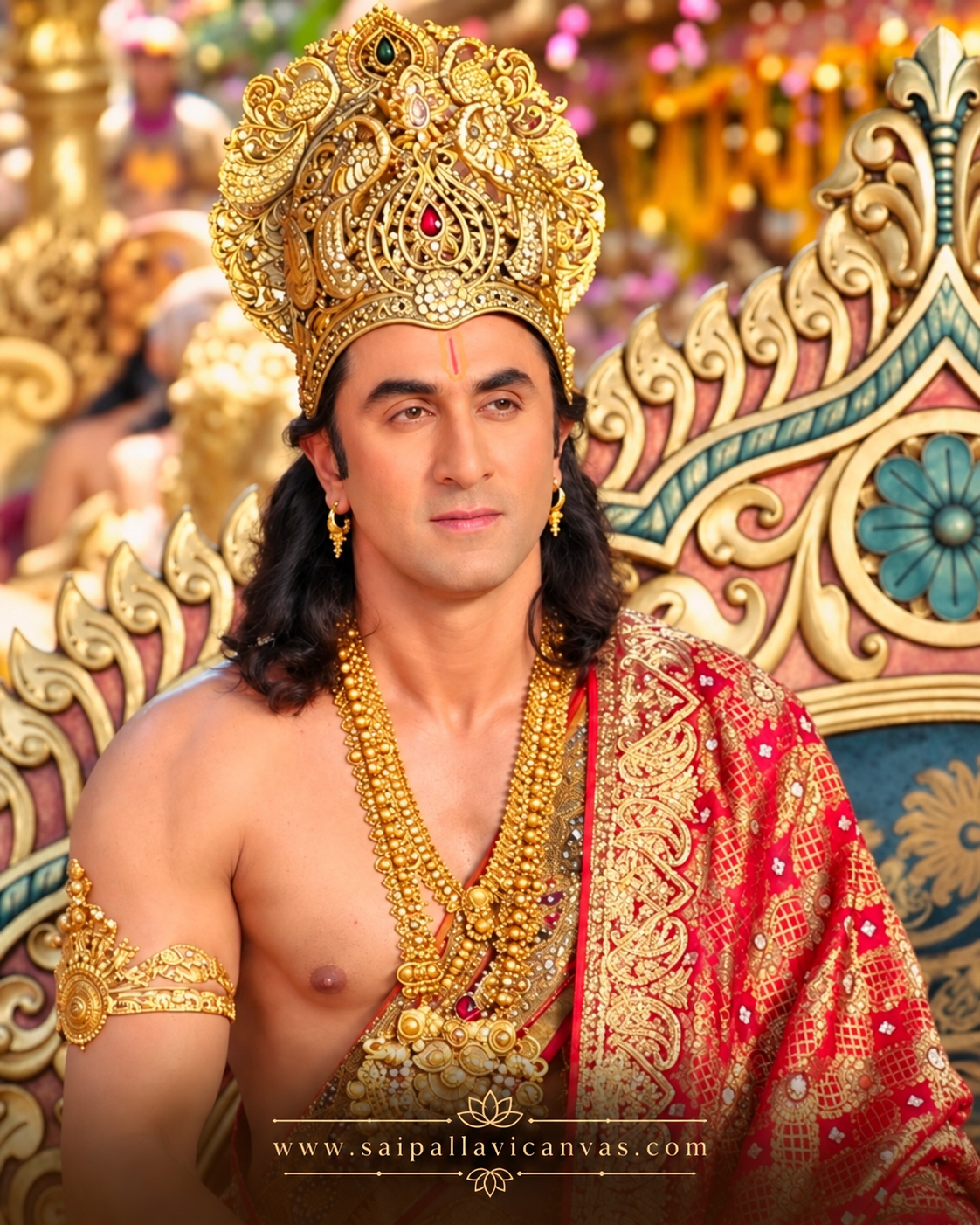
In the varmala still the same red-gold language holds: repeating gold butis on the body of the saree, a heavy gold pallu border, a fitted embroidered blouse. It is Banarasi-weight court cloth, not a painted folk textile. Ram, in the matching palace still, wears a gold kiritam, a multi-strand haar on a bare chest, a bajuband, and a red silk shoulder drape worked with jaali and paisley. The two looks sit in one register.
The field is flowers. The border is paisley and gold. The hands are alta. That is the palace Sita the stills give us. Not a slogan. A surface.On reading the released close-ups
Cinema is one more interpretation in a tradition that has imagined Sita differently for centuries.On cultural memory
When the forest
takes the gold away
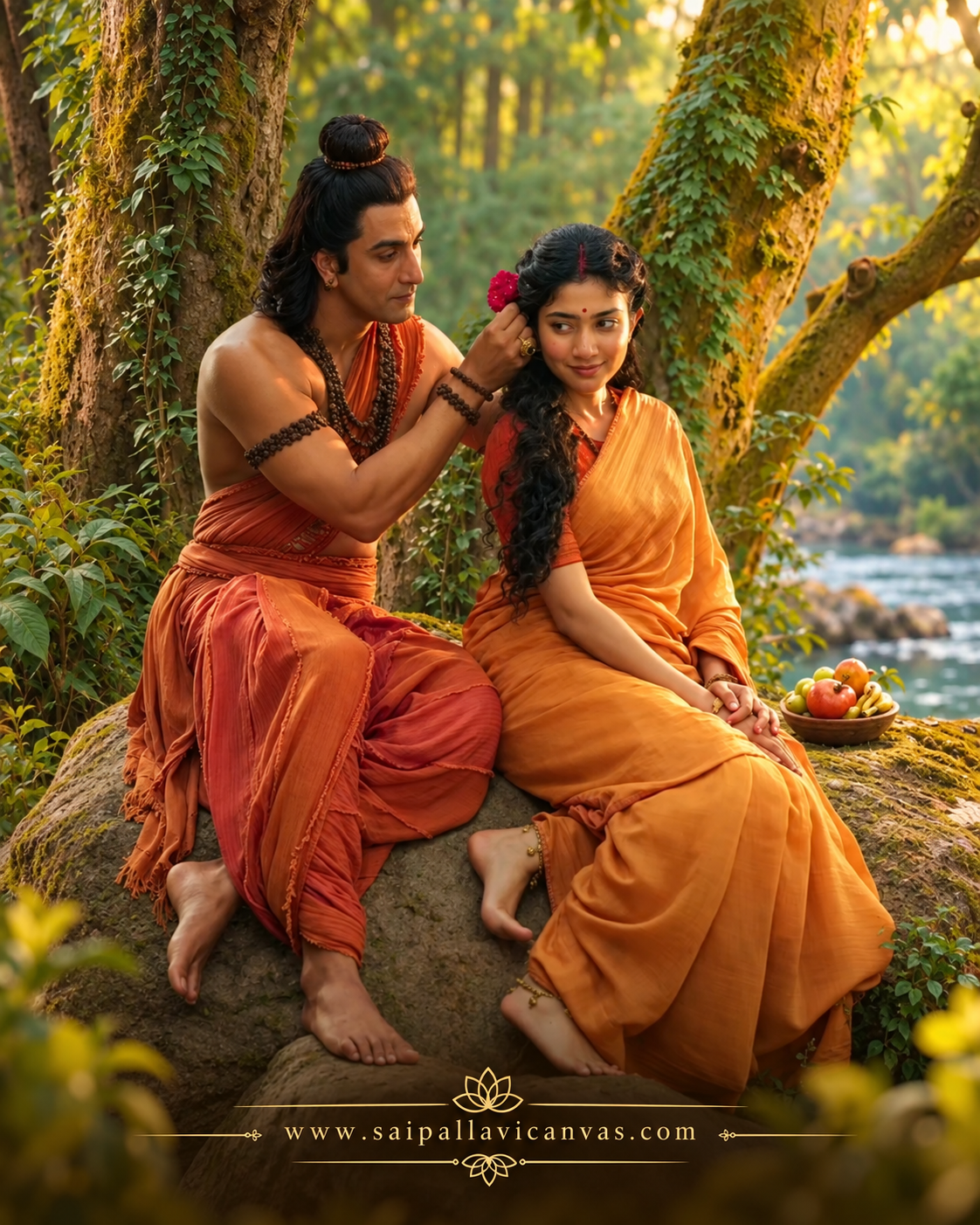
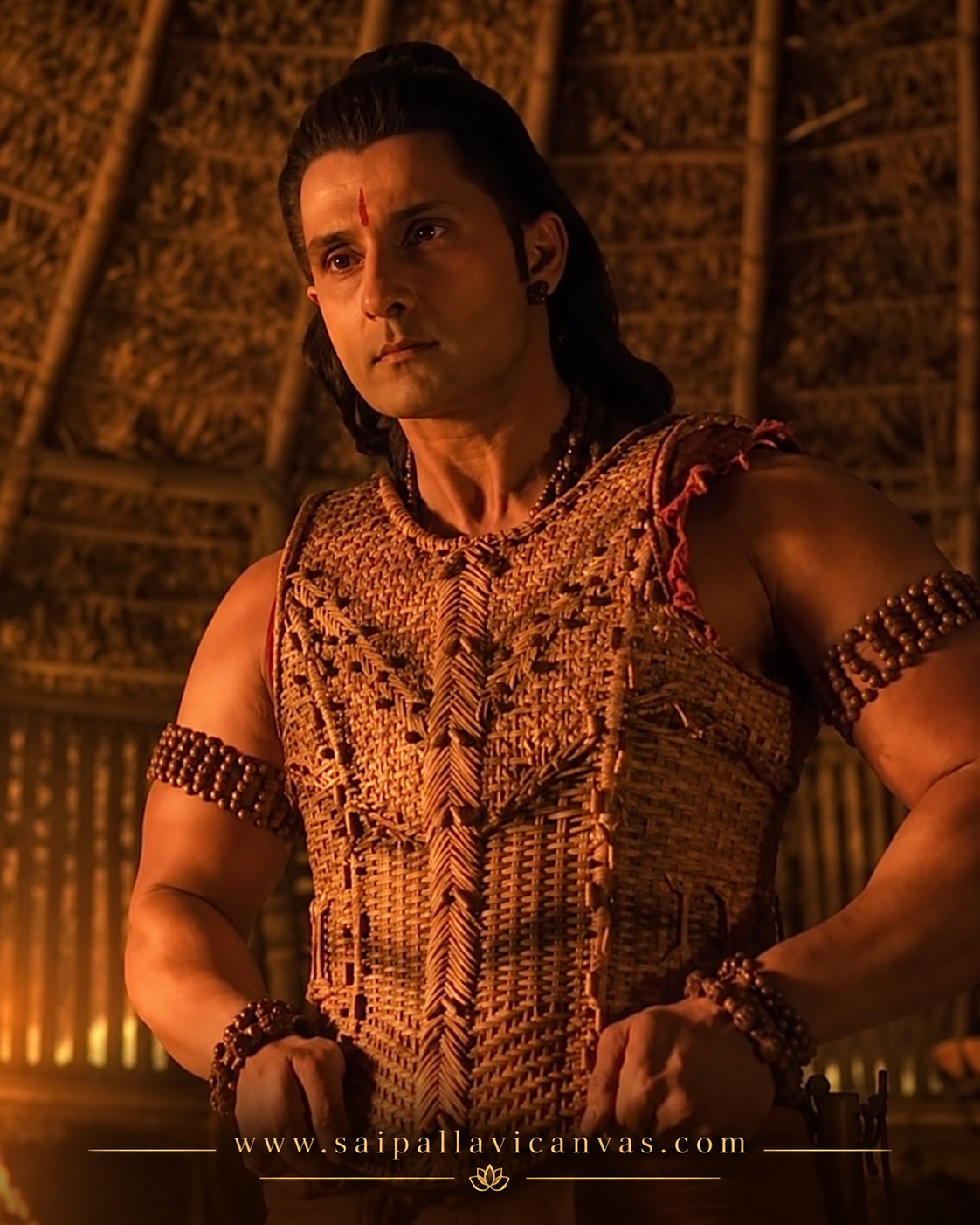
Vanvas is the second sentence of the same paragraph. The Banarasi weight is gone. Sita stands in a simple terracotta or peach saree, a matching modest blouse, beads that read as rudraksha rather than court gold. The fabric is meant to look used: crushed, vegetable-dyed, without palace shine. Lakshmana’s forest vest follows the same logic: bark-and-leaf weave, rustic, functional. Nothing royal remains on either of them.
That is why the palace look has to be rich. If the first image is already spare, exile has nowhere to go. Ornament is given so that its removal can be felt. The woman stays the same. The world around her changes, and the costume says so before a line is spoken.
The same person remains, but the world around her has changed, and the costume tells that story before a single line is spoken.On costume as storytelling
Dignity over
spectacle
The blouse debate was always larger than a garment. It was an argument about who owns Sita’s picture. The designers’ answer is narrower and more useful: keep her graceful, keep her recognisable, do not let the costume shout louder than the face. That restraint suits Sai Pallavi because her screen presence has never depended on styling. Expression and stillness already carry the frame.
A film like Ramayana cannot recreate a confirmed historical wardrobe. None exists. The task was never to prove a particular motif belonged to Treta Yuga. It was to make Sita feel believable to people who already pray to an image, and then to let exile strip that image down to earth. The stills, read honestly, do that work. Red silk and temple gold first. Terracotta and almost no jewellery after. That is the costume. The rest is commentary.